
From Garage to Food Tech Classroom: Creating a Bright, Flexible Learning Space at Lancing College
How Witley Jones helped transform a compact former garage into a modern junior Food Technology classroom designed for safety, flexibility and inspiring hands-on learning.
When Lancing College set out to introduce Food Technology for its younger pupils, the starting point was far from a traditional teaching kitchen. A small room, originally built as a two-car garage, needed to be transformed into a safe, functional learning environment that could accommodate up to 18 students.
Working in partnership with Witley Jones, Facilities Manager Oisín McKeown led the project to reimagine the space, turning a structural limitation into an opportunity for creative design.
At the heart of the project was a simple but demanding brief: create a junior Food Technology classroom that could comfortably accommodate the required number of pupils while still allowing enough space for practical work, safe movement and full DDA compliance. Achieving this within such a compact footprint required several stages of design development, with input from both the facilities team and teaching staff.
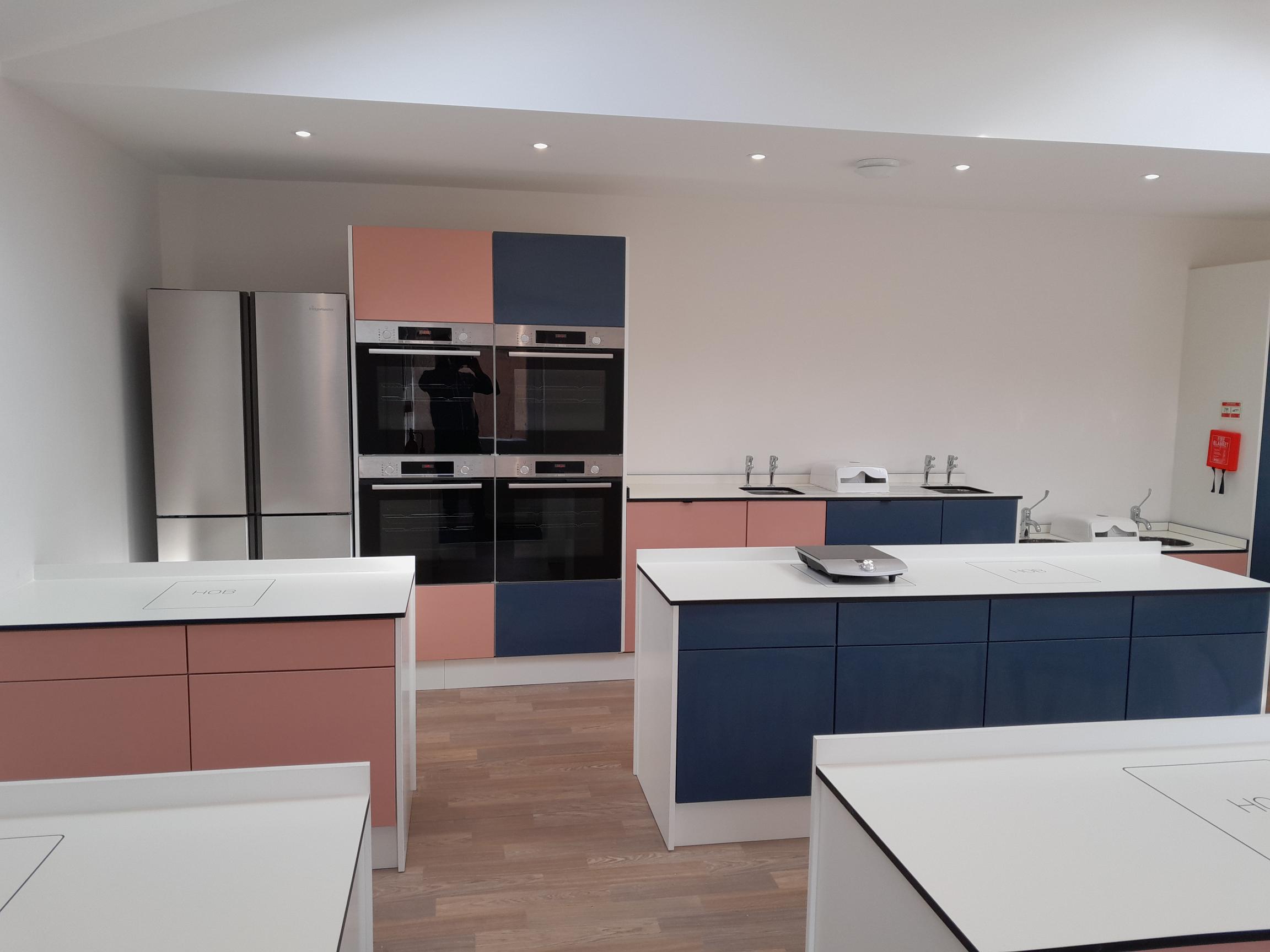
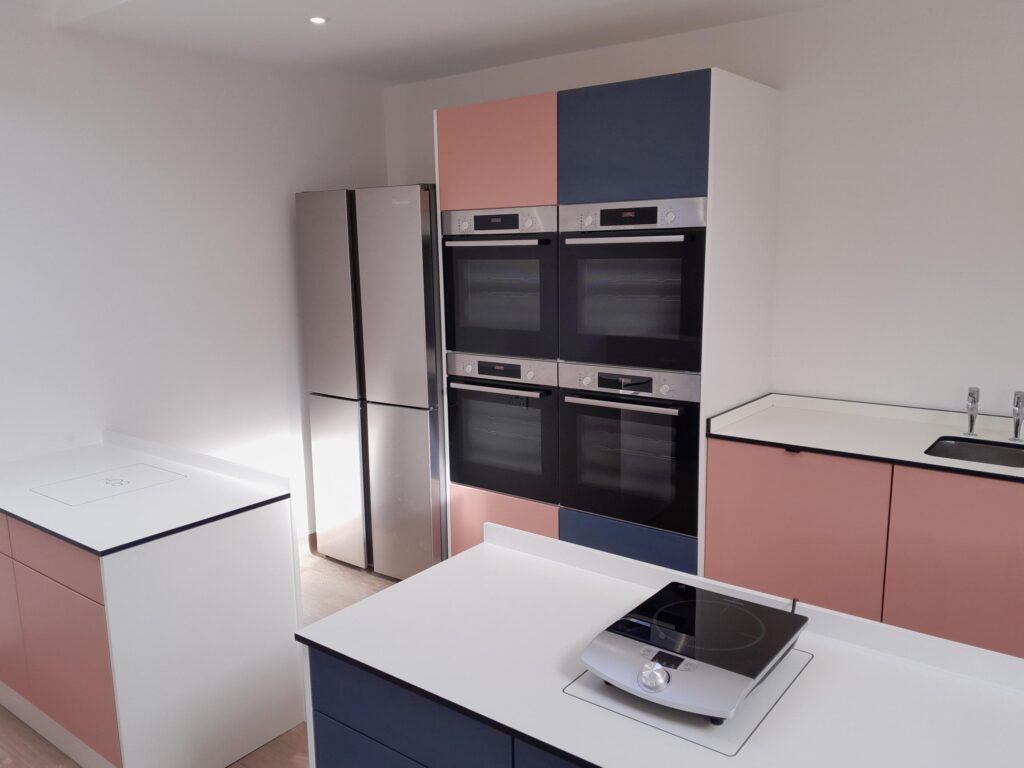
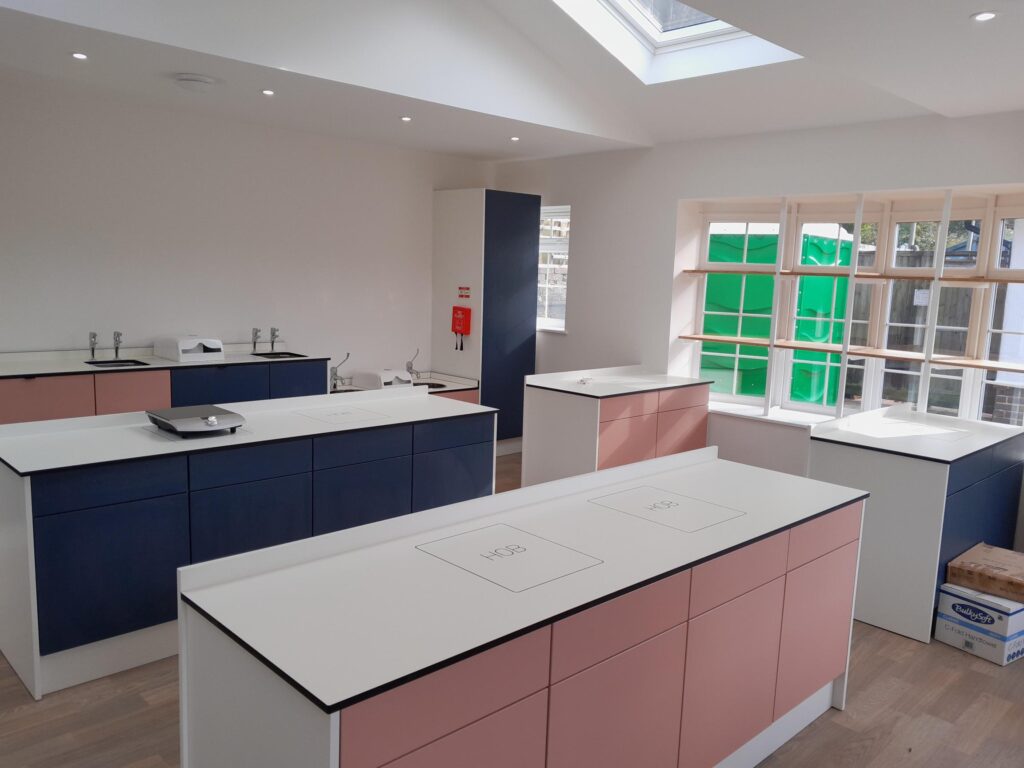
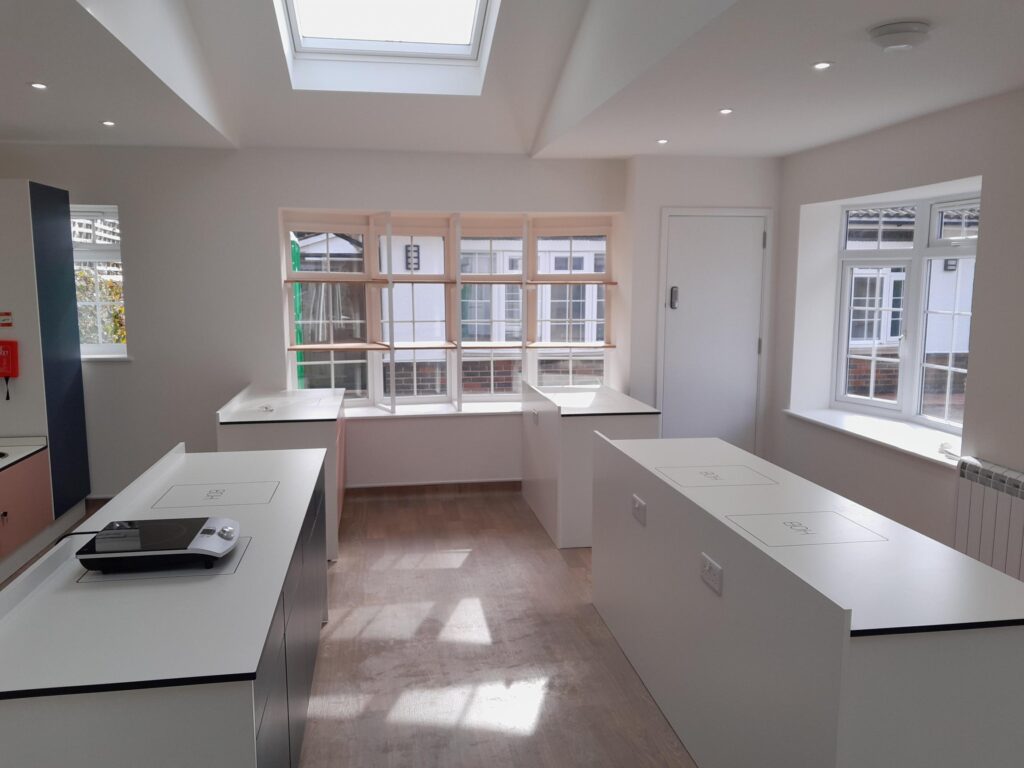
The final layout centred around fixed workstations with power and portable hobs for pupils, alongside the integration of four ovens, a fridge freezer, two dishwashers, two large sinks and two dedicated hand-wash sinks – a challenge that pushed the drawing office to make every centimetre count.
The college also wanted a modern, uncluttered look, leading to handle-less cabinetry and contemporary colours, with the finishing detail being engraved outlines in each Trespa worktop to show pupils exactly where to position the portable hobs during lessons. The physical constraints of the room added another layer of complexity.
Reimagining the Space
The low ceiling and compact footprint meant careful planning was needed to make the space feel open while still providing sufficient workstations for practical lessons.
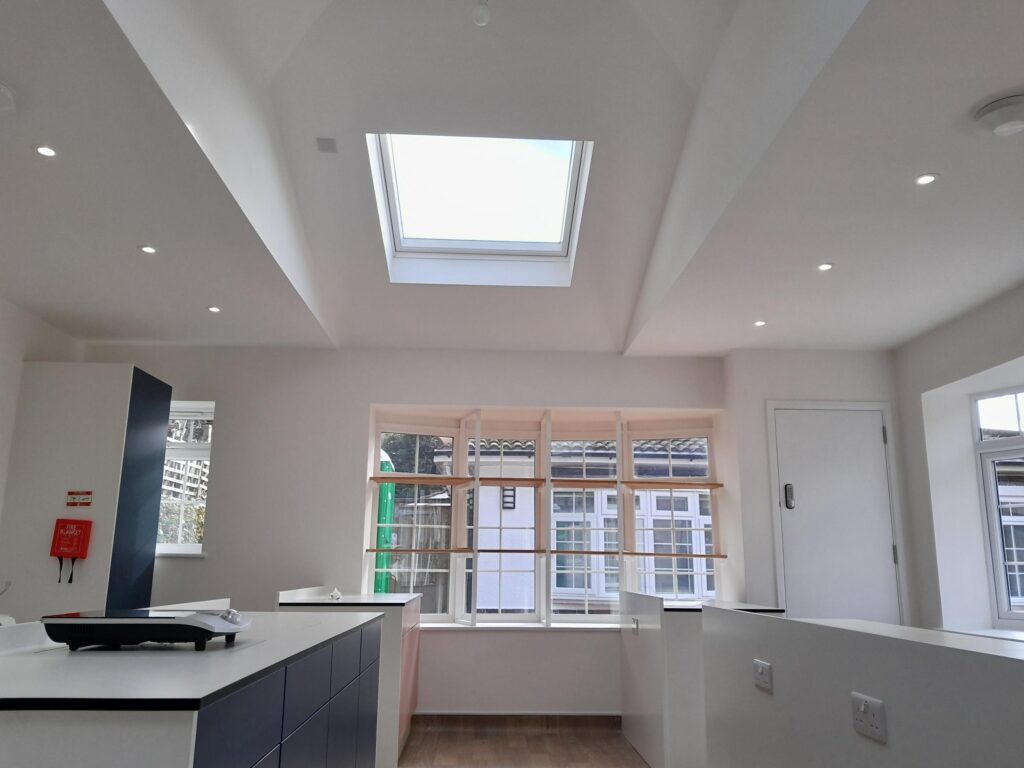
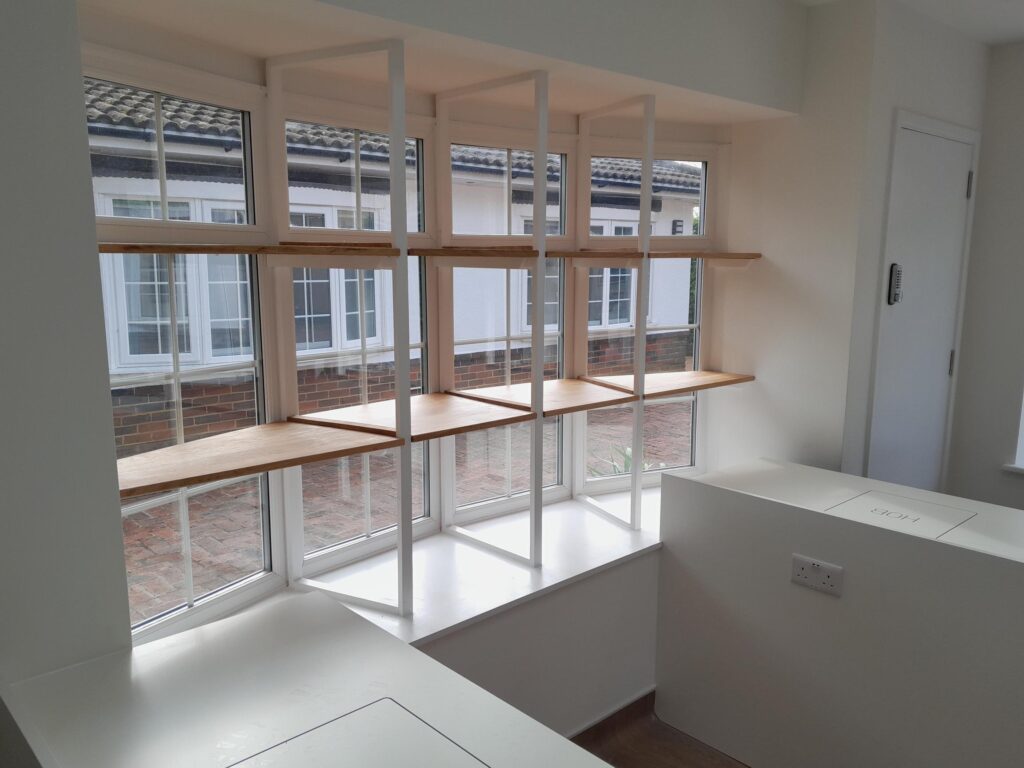
To address this, the ceiling was redesigned to follow the pitch of the existing roof, creating a vaulted section that dramatically improved the room’s sense of space. Two large roof windows were also installed, bringing in natural light and transforming the classroom’s atmosphere.
“A low ceiling involved creating a vaulted section following the existing pitch of the roof, incorporating two large Velux windows which have given the room a much brighter aspect, flooded with natural light,” explains Oisín.
The result is a space that feels far larger than its footprint suggests – bright, welcoming and purpose-built for practical learning.
Designing for Safety, Accessibility and Capacity
Ensuring safe circulation and accessibility within the compact layout was a key priority. Witley Jones worked closely with the college to refine the layout, ensuring the space between workstations met accessibility requirements without compromising usable worktop space.
“The space between workstations was maximised to comply with DDA regulations while not compromising the usable worktop space,” says Oisín.
Although the college led much of the early planning and research, Witley Jones brought specialist experience in educational environments, helping to fine-tune the designs and ensure the space worked effectively for teaching.
“The majority of the design, research and layout was done by myself as the school were new to the food technology side. Witley Jones helped me with their experience in tweaking the designs to achieve the vision.”
Teaching staff were involved in the final stages, helping to select colours and finishes to create a welcoming environment for pupils.
Flexible Workstations for Modern Teaching
With space at a premium, flexibility was a critical design consideration. Rather than installing fixed hobs at every workstation, the team explored a portable solution that would allow the room to be used for other subjects when required.
Witley Jones suggested engraving hob positions directly into the durable Trespa worktops, a simple but effective detail that ensures the portable hobs are positioned correctly during lessons.
“As space was at a premium, I started to explore the removable hob idea,” Oisín explains. “With help from Witley Jones, they suggested the engraved position, which I thought was a great idea.”
This approach has given the classroom greater adaptability while maintaining organisation and safety during practical sessions.
“By not having fixed hobs, it has given the room much more flexibility, and it can be used for other subjects as well.”
After noticing the portable hobs could shift slightly during use due to their design, a simple addition of heat-resistant silicone mats helped secure them in place, demonstrating the project’s practical, problem-solving approach.
A Modern, Streamlined Finish
The classroom’s clean aesthetic was also carefully considered. Handle-less cabinetry creates a sleek, contemporary look while reducing the risk of clothing or aprons catching during busy lessons.
“Both staff and children love it,” says Oisín. “Part of the thinking was protruding handles are easy to catch clothing or aprons on. It makes the room look very sleek and modern.”
Appliances, including ovens, sinks, dishwashers and a fridge freezer, are arranged to support a smooth workflow during lessons, helping teachers manage practical activities with multiple pupils working at once.
A New Opportunity for Pupils
The new Food Technology space has quickly become a popular addition to the school’s curriculum. For many pupils, it offers an exciting introduction to practical cooking skills and hands-on learning.
“Having an exciting new lesson for the children has been very well received by teachers, the children themselves and the parents,” Oisín says.
In the competitive landscape of independent schools, the new facility has also brought broader benefits.
“In the challenging world of independent schools where pupil numbers are key, this has already become a unique selling point for the Head to promote.”
A Small Space with Big Impact
By combining thoughtful design, practical solutions and collaborative working, Witley Jones helped Lancing College transform an unconventional space into a bright, flexible Food Technology classroom.
What was once a small garage is now a vibrant learning environment – one that supports engaging lessons today while offering the flexibility to adapt for future teaching needs.
The project demonstrates how thoughtful design and close collaboration can unlock the potential of even the most challenging spaces – creating a practical, inspiring environment that supports both teaching and learning for years to come.
Stay up to date with furniture design trends
Subscribe to our newsletter and follow us on Twitter or LinkedIn.