
How to Design a School Laboratory
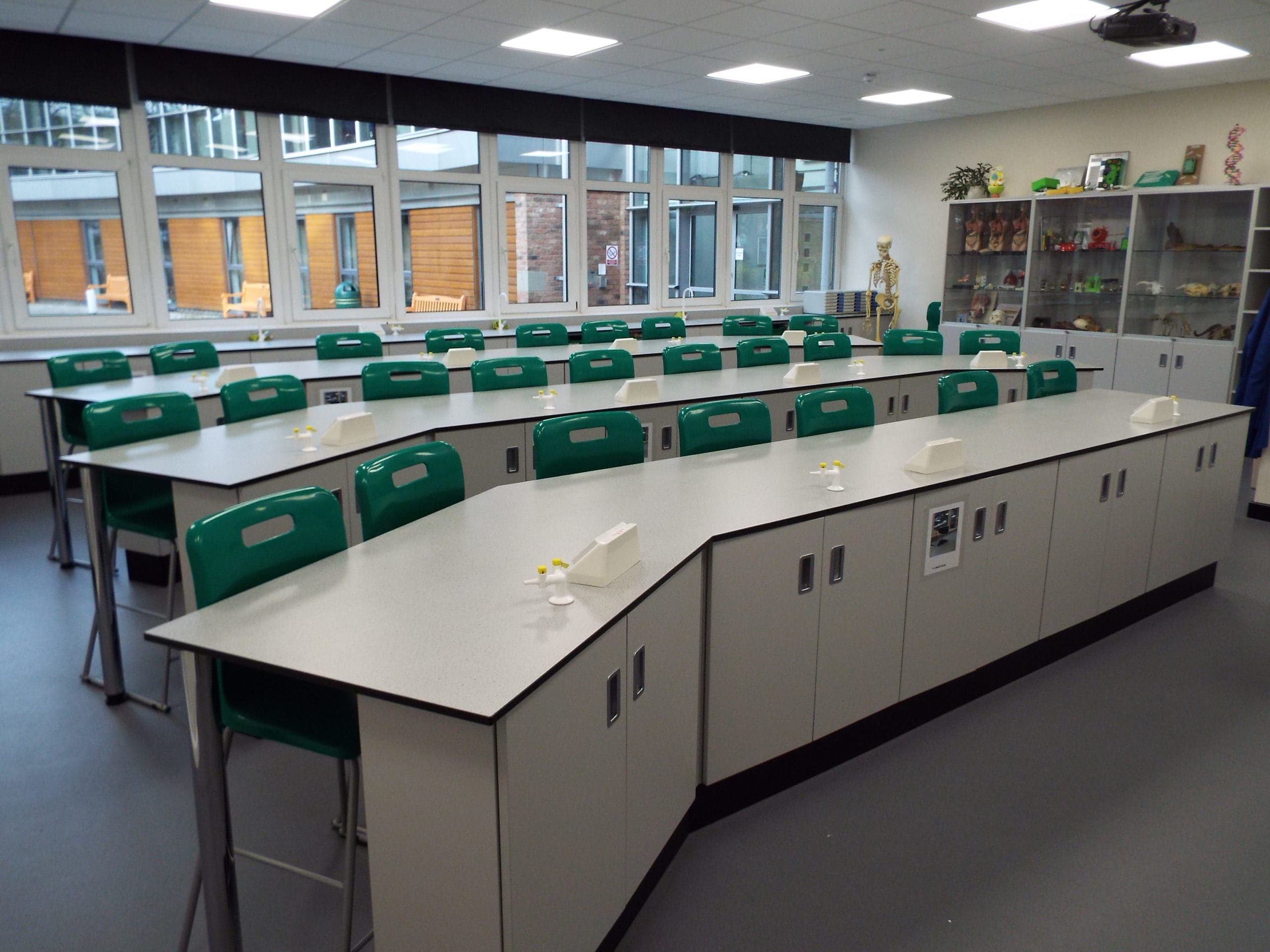
Designing a modern science laboratory for schools is about far more than fitting benches and sinks into a room. Today’s schools need flexible, future-ready environments that inspire curiosity, support hands-on learning, and meet strict safety standards, all while staying within budget.
A comprehensive approach to school laboratory design is essential for creating effective learning environments that meet the unique needs of educational institutions. School science laboratories should be a long-term investment that positively influences teaching and learning.
Whether you’re planning a brand-new school science lab design or refurbishing an existing space, the process requires collaboration, careful planning, and a deep understanding of how students and teachers will use the space day to day.
Key Principles of Science Laboratory Design
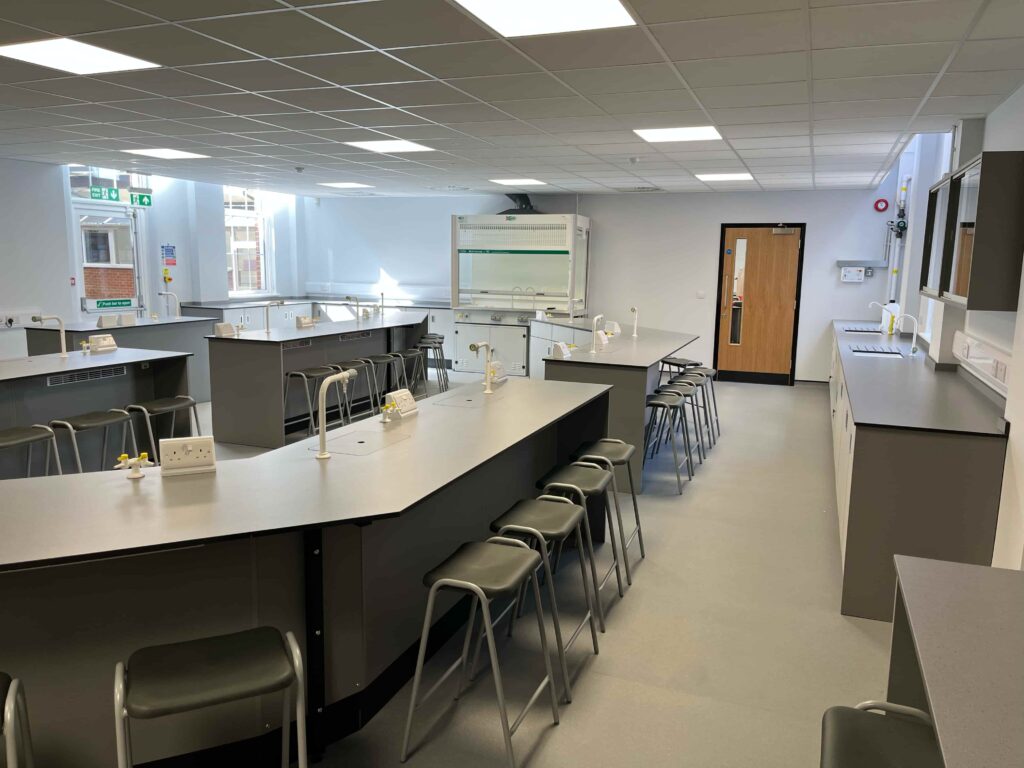
At the heart of every successful science classroom project is collaboration. Bringing together school business managers, estates teams, teaching staff, and specialist contractors ensures the final space works for everyone. A thorough site survey is an essential first step in the planning process, allowing for precise measurements and practical assessment of the existing space. Key factors such as environmental conditions, safety protocols, and equipment selection also influence every aspect of science laboratory design.
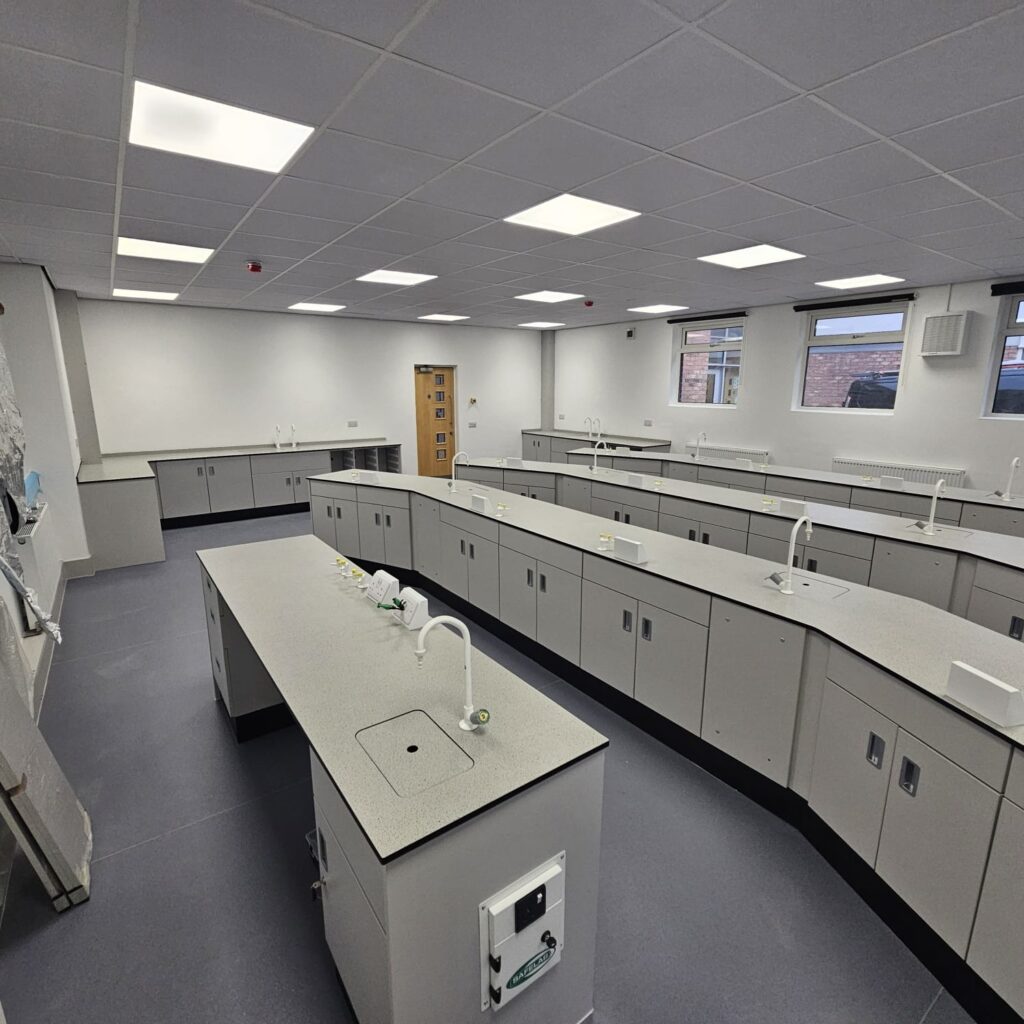
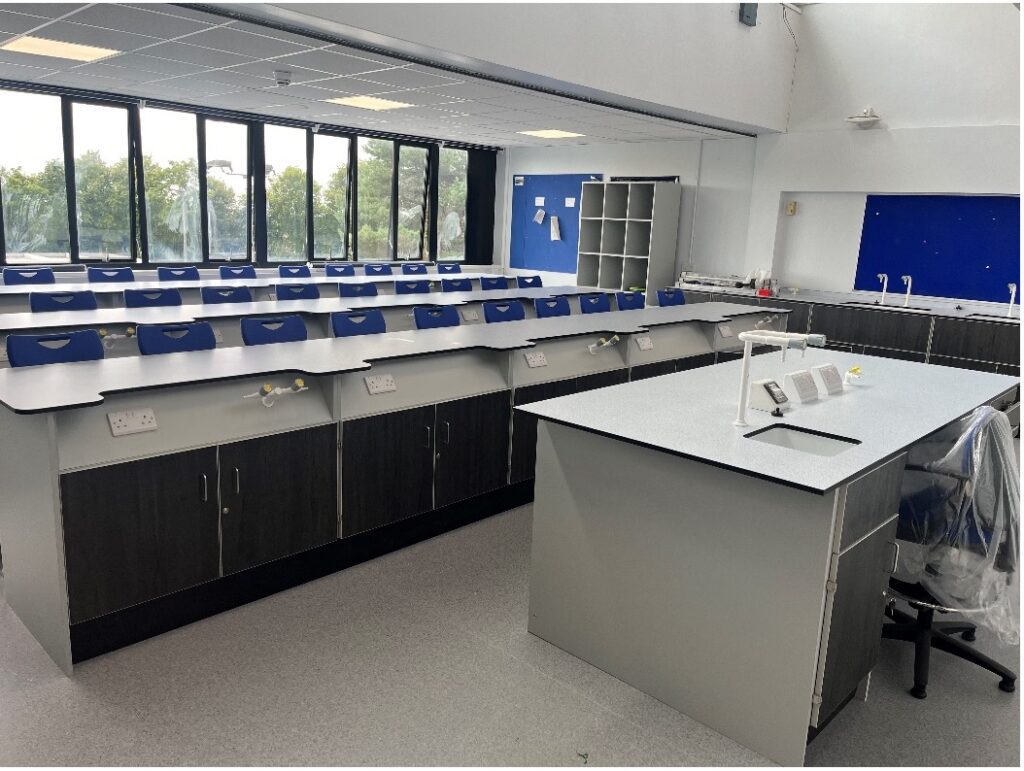

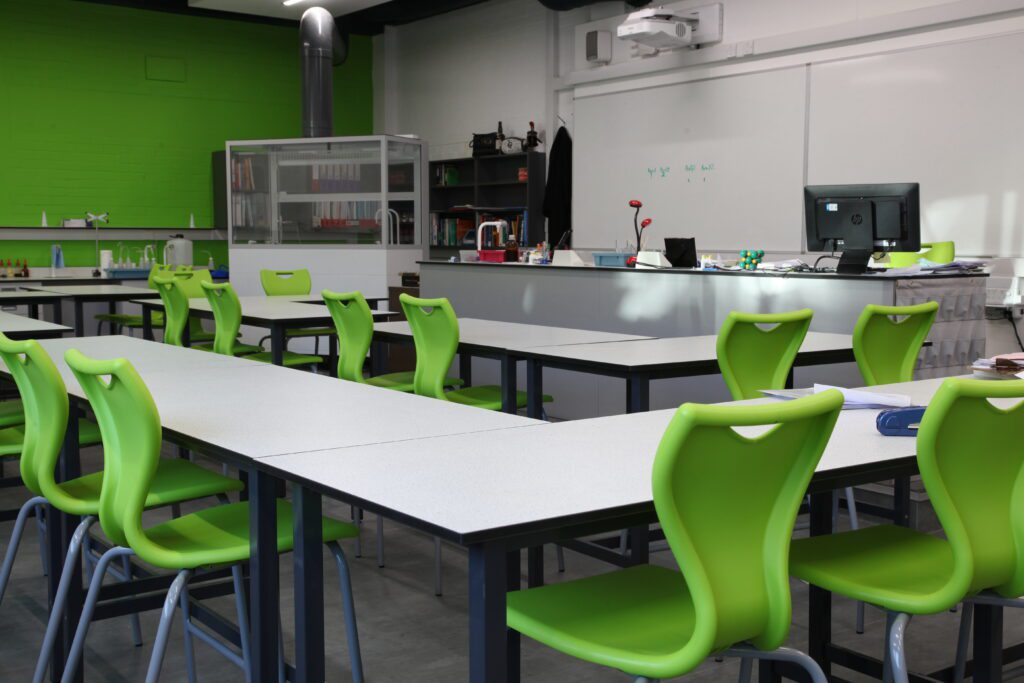
A great example of this approach can be seen at Derby High School, where early engagement with stakeholders helped shape two new laboratories designed to support all science disciplines. The brief prioritised flexibility, which guided every design decision, from layout to utilities.
A strong design process should focus on:
1. Collaboration from day one Early planning meetings align expectations, define priorities, and ensure designs reflect real classroom needs; not just theoretical layouts. We work closely with mechanical and engineering contractors responsible for plumbing and electrics, providing detailed service location drawings and holding coordination meetings to make sure water, waste, gas, and electrical services are positioned exactly where they’re needed.
2. Flexibility for future learning Science teaching evolves. Your lab should support a range of different teaching styles, from demonstrations to group experiments, and adapt to future curriculum changes.
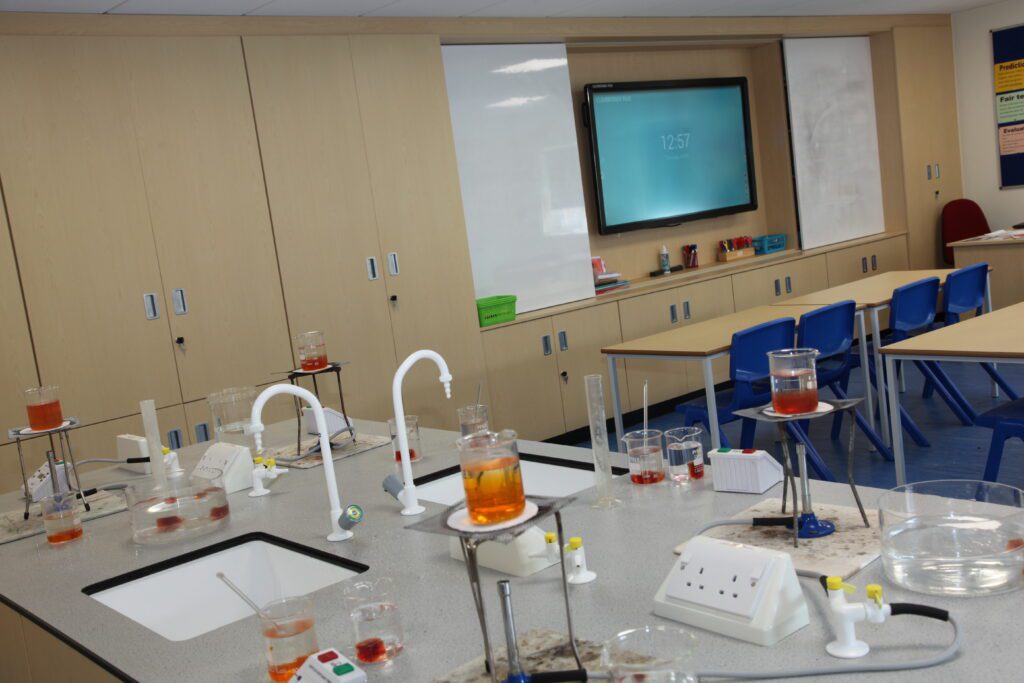
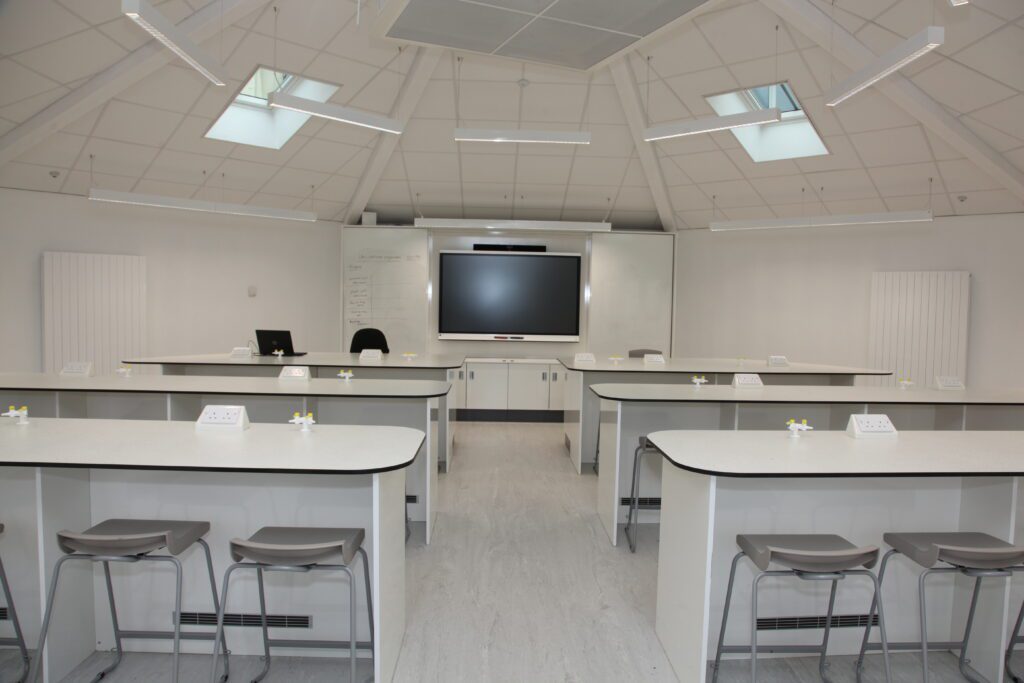
At Ark Alexandra Academy, this principle was brought to life by transforming an underused staff room into a fully equipped laboratory. The result was a flexible, modern space that supports hands-on learning without requiring a purpose-built extension.
3. Efficient use of space Working with to-scale drawings and design layouts allows you to visualise how students will move through the room, where utilities will sit, and how storage can be integrated without clutter.
This was particularly important in the conversion of a former catering kitchen at Derby High School. The space had to be completely reimagined: walls removed, flooring relaid, and services reconfigured to create a functional and efficient lab layout.
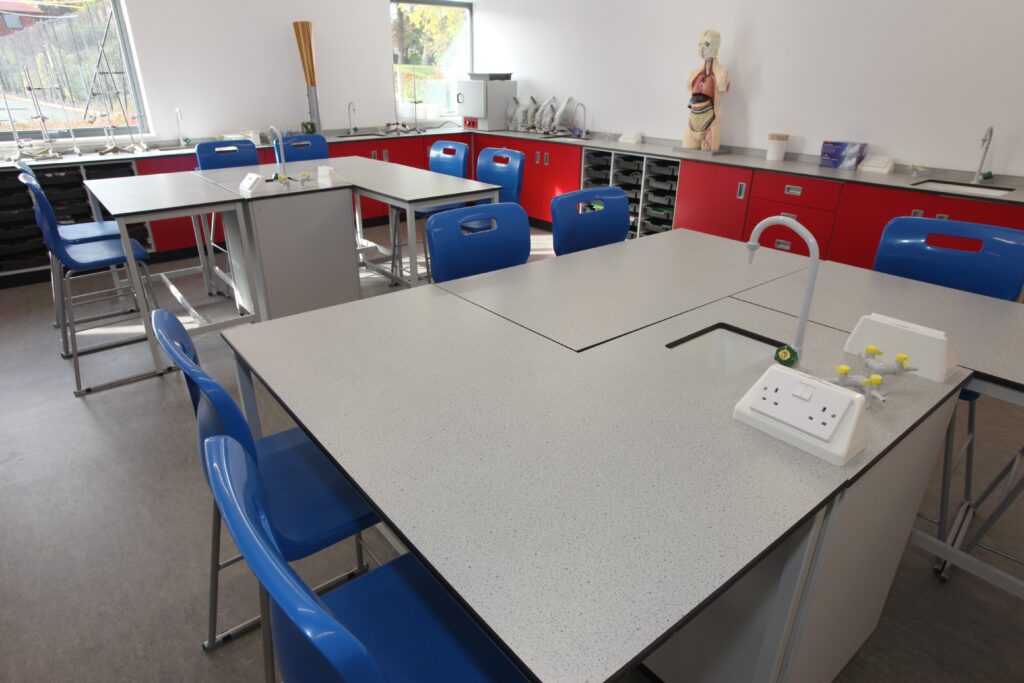
4. Durability and value for money Materials must withstand heavy daily use. Investing in long-lasting, chemical-resistant surfaces ensures your lab remains functional and cost-effective for years to come. At The Wilnecote School, for example, refurbished laboratories were fitted with Trespa worktops, providing a robust, long-term solution suited to a busy school environment.
Layout Requirements (Biology, Chemistry, Physics)
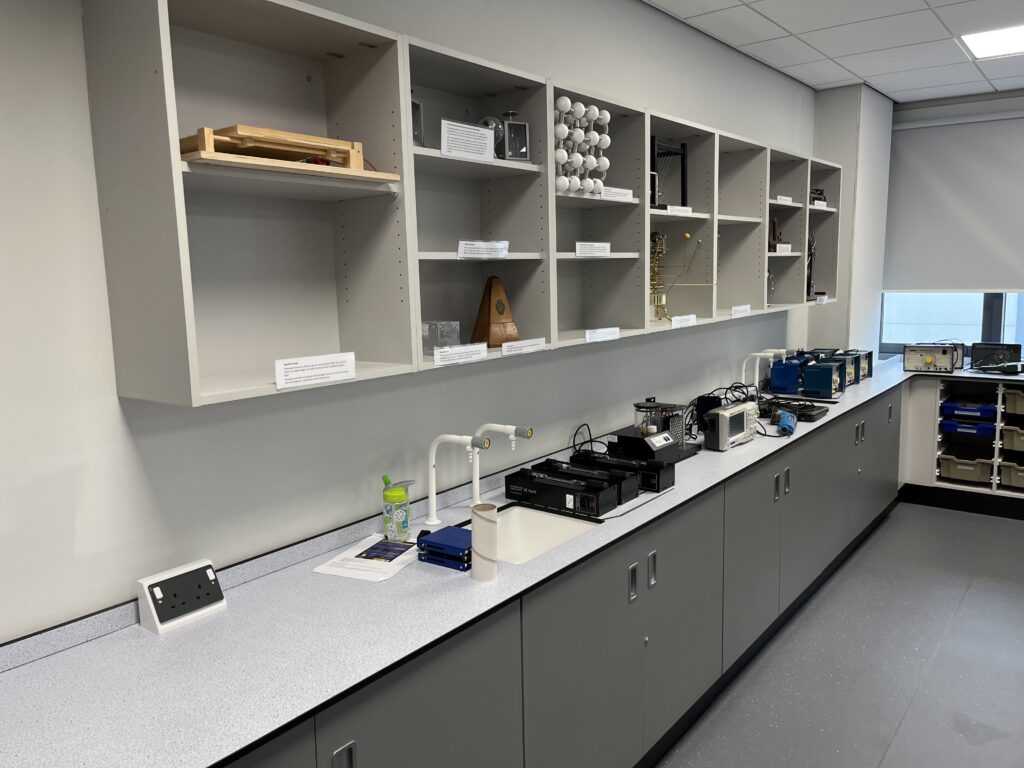
A well-planned laboratory layout for school labs needs to accommodate the distinct needs of a biology lab, chemistry lab, and physics lab, often within a single multi-use space. The layout of a science lab influences how effectively students can engage with the material and collaborate with peers.
At Derby High School, both laboratories were designed to support all three sciences. This required careful zoning, ensuring each area could adapt to different teaching requirements without compromising safety or usability. Multi purpose labs offer increased flexibility, allowing the space to be adapted for biology, chemistry, or physics lessons as needed, and are especially beneficial in schools with limited space.
Biology Labs
- A biology lab requires ample workspace for microscopes and specimens
- Benefit from good natural lighting
- Need easy access to water and waste disposal
- Specialised requirements include dedicated storage for biological samples and equipment
Chemistry Labs
- A chemistry lab demands robust ventilation systems
- Require safe storage for chemicals
- Need clearly defined zones for practical experiments
- Chemistry lab design should include features such as mobile fume cupboards and chemical-resistant laboratory worktops for safety and flexibility
During the Derby kitchen conversion, a mechanical ventilation system was installed to ensure safe airflow, an essential feature for any chemistry-focused activities and a key aspect of chemistry lab design.
Physics Labs
- Often need flexible layouts for demonstrations and equipment setups to support physics lessons and STEM education
- Require accessible electrical outlets throughout
- Benefit from open floor space for larger apparatus
Across all disciplines, circulation space is critical. Students must be able to move safely between workstations, particularly during practical lessons. Laboratory worktops should be chosen for durability, chemical resistance, and ease of maintenance to ensure safety and longevity in school labs.
Technician rooms are essential support spaces adjacent to labs, providing safe storage, preparation, and cleaning areas for equipment and hazardous materials.
When planning ergonomic considerations, it is important to design for the appropriate age range of students, ensuring that furniture and layouts are suitable for high school students or other targeted groups.
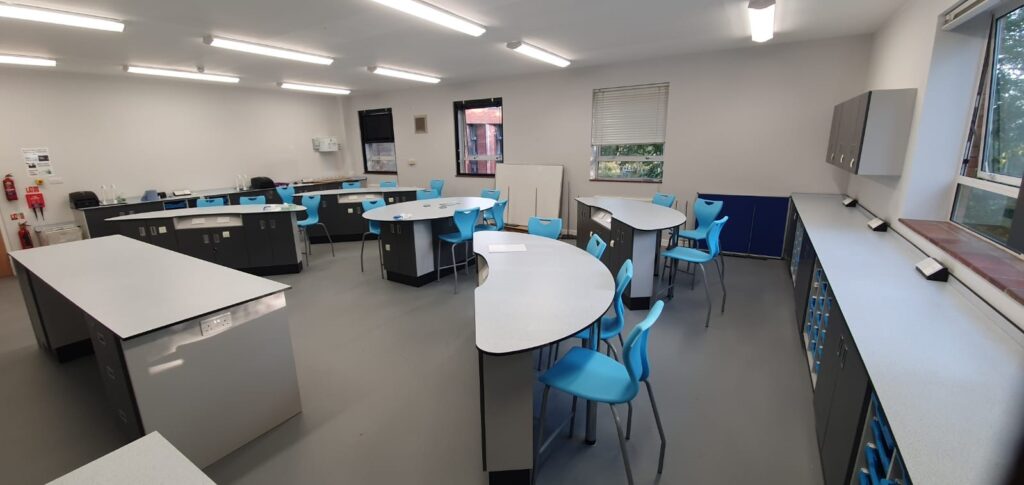
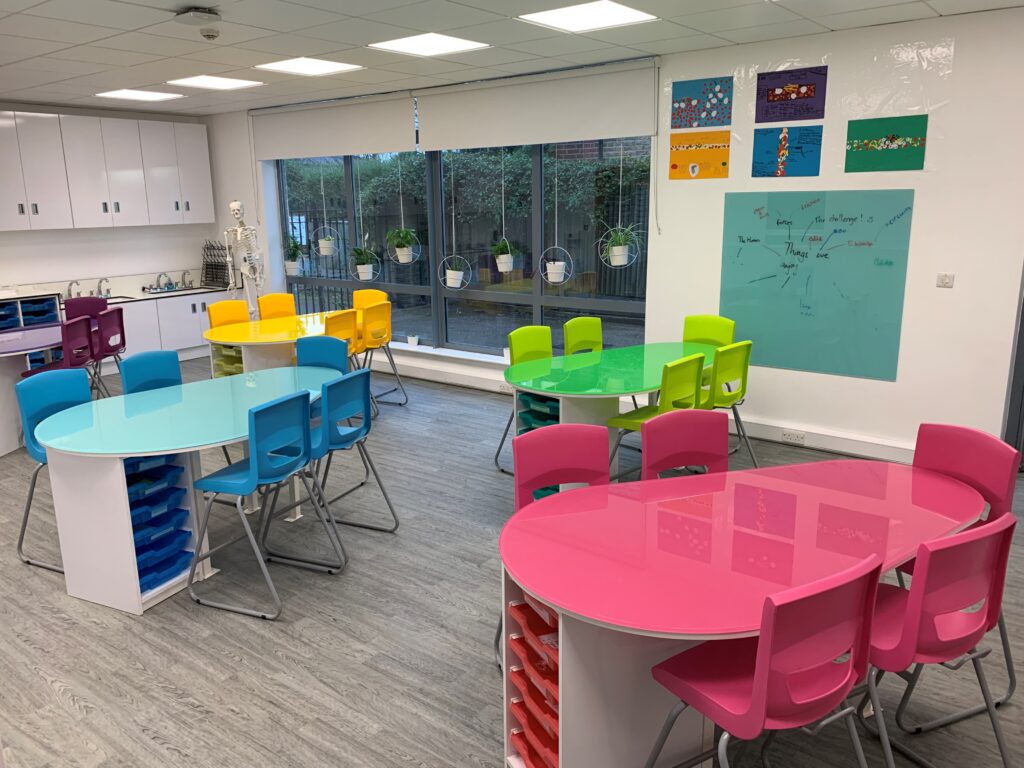
At the Royal Masonic School for Girls, large circular workstations were introduced to maximise space and encourage collaboration, while still maintaining safe movement around the room. Collaborative layouts in science labs encourage teamwork and the development of communication skills among students. Collaborative layouts encourage pupils to work in teams, developing communication and problem-solving abilities alongside scientific knowledge. Effective lab design fosters curiosity, teamwork, and discipline among students, which are essential skills for future careers.

Safety & Compliance Considerations
Safety is non-negotiable in any science laboratory design.
Key considerations include:
- Ventilation systems to manage fumes from bunsen burners and maintain air quality. Proper ventilation is essential to ensure safety and air quality, and the room should be ventilated to a minimum of 8 litres per second per person to limit carbon dioxide concentration.
- Heating systems are required to maintain a safe and comfortable environment. A school science lab should maintain a temperature of 18 degrees Celsius at 0.5m above floor level when the outside temperature is -1 degrees Celsius.
- Emergency systems such as gas shut-off valves and eyewash stations must be included in every laboratory to ensure rapid response in case of accidents.
- Safe storage solutions for chemicals and equipment
- Clearly marked emergency exits and access routes
- Durable, chemical-resistant materials such as Trespa worktops
- Integrated utilities (gas, water, electricity) installed to regulatory standards, with careful coordination during the installation phase to ensure safety and compliance.
- Furniture and equipment should suit the specific needs of the science lab environment, considering robustness, functionality, and flexibility.
Designing for safety in real environments
At The Wilnecote School, safety was enhanced by integrating Arboles taps and Vulcathene pipework, ensuring safe chemical handling and reliable waste management.
Similarly, at Derby High School, new trenches were dug to install gas, water, and waste services precisely where needed, ensuring compliance while supporting the final layout.
A safety-first approach also means designing layouts that minimise risk; keeping walkways clear, positioning storage around the perimeter, and ensuring teachers have full visibility of students at all times.
Furniture & Equipment Essentials
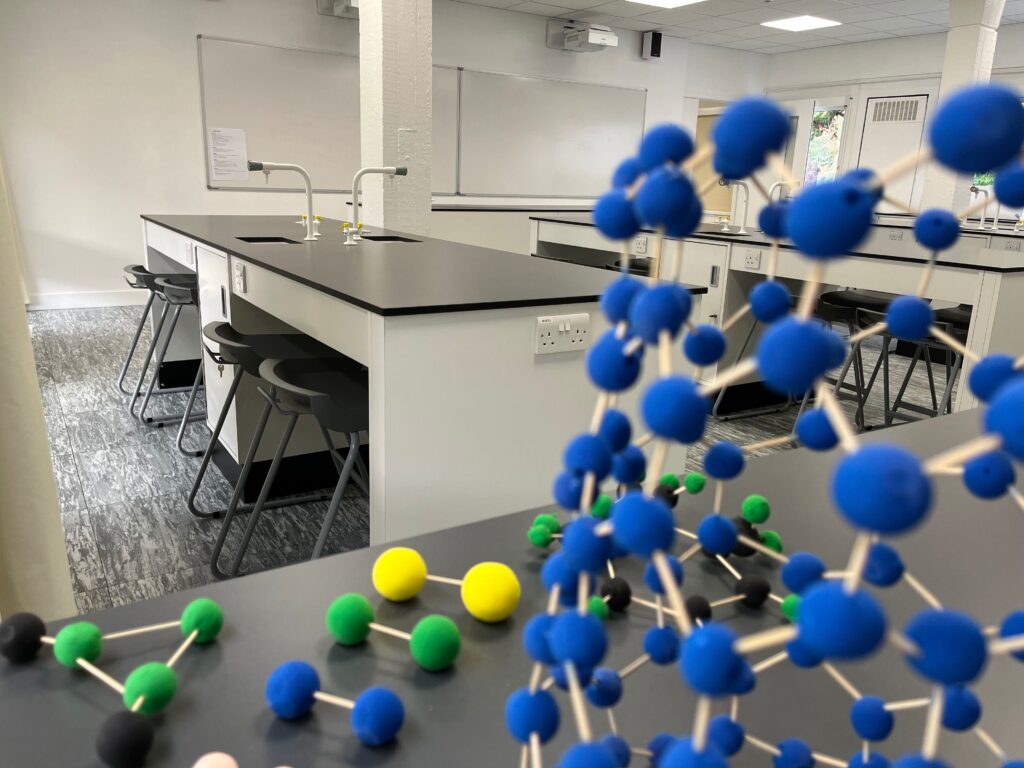
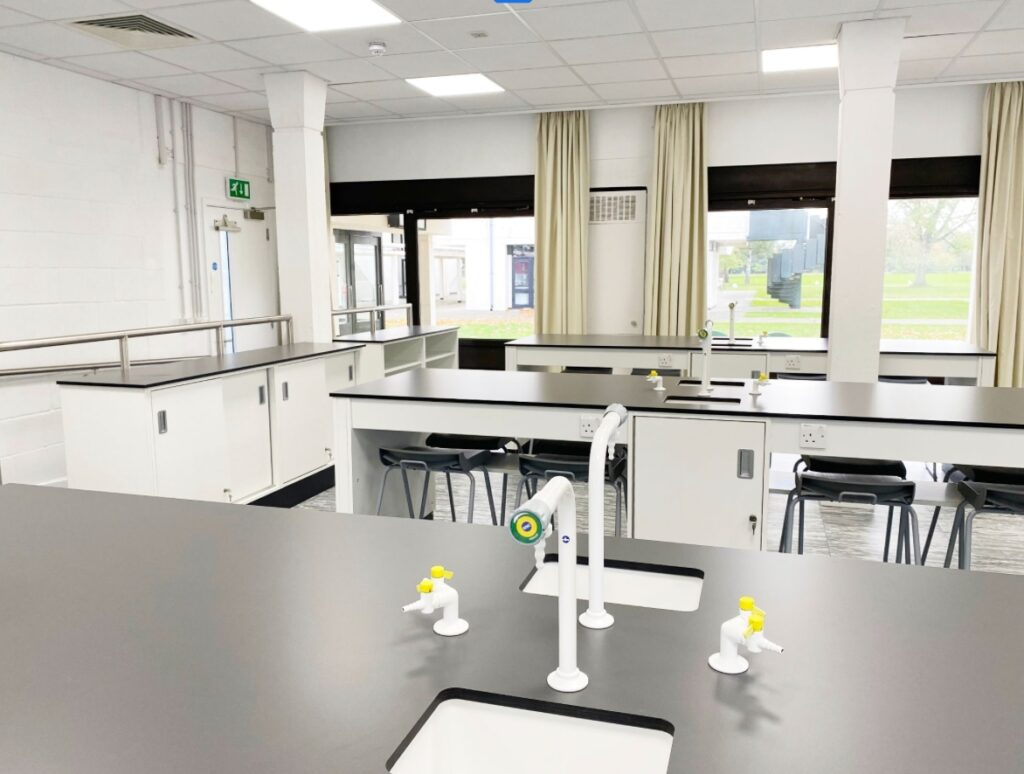
The right lab furniture for schools plays a crucial role in both functionality and aesthetics. Science lab furniture is a key component in creating functional and inspiring laboratory environments, ensuring that the space supports both safety and effective learning.
Core essentials include:
- Workbenches with integrated storage to maximise space
- Chemical-resistant worktops for durability
- Modern gas and water taps, sinks, and waste systems
- Flexible seating arrangements for different lesson formats
- Technology integration, including interactive whiteboards and AV equipment
Furniture that supports learning outcomes
At the Royal Masonic School for Girls, carefully planned workstations combined durability with collaboration, creating an environment that encourages group learning and interaction.
Meanwhile, Ark Alexandra Academy benefited from custom-fitted workstations designed to make the most of a compact space, proving that even smaller rooms can deliver high-impact STEM classroom design.
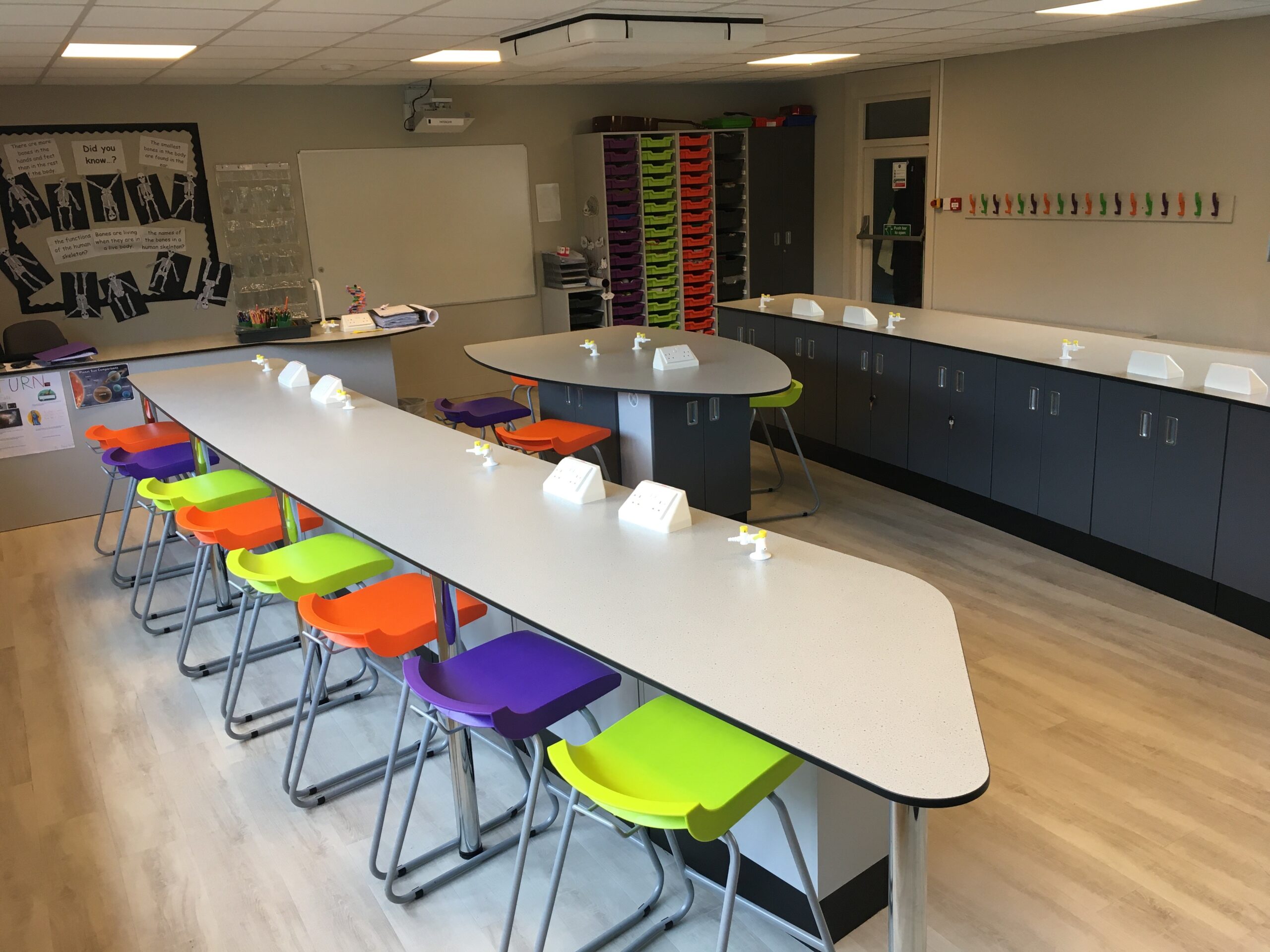
Design isn’t just practical, it’s also visual. Introducing colour through cabinetry or finishes can reflect school branding or departmental identity, helping create a cohesive and engaging environment.
Science Laboratory Furniture Design FAQS
There are several key factors to consider, including safety, functionality, flexibility, environmental elements, and equipment selection. Safety remains the top priority, but all these factors collectively influence the effectiveness and safety of the lab space.
This depends on class size, but layouts must allow safe movement, adequate workspace, and clear access to utilities.
For laboratory worktops, chemical-resistant materials like Trespa are ideal due to their durability, resistance to chemicals, heat, and scratches, as well as ease of maintenance.
Yes. Projects like Derby High School and Ark Alexandra Academy show how spaces such as kitchens and staff rooms can be successfully transformed, with the installation process being a key step to ensure a safe and high-quality outcome.
By designing flexible layouts, integrating modern technology, and choosing durable materials that will stand the test of time.
Ready to Create a Future-Ready Science Lab?
Designing a school science laboratory is about creating more than just a functional space; it’s about shaping an environment where curiosity is sparked, practical skills are developed, and confidence in science can grow.
As the examples throughout this article show, whether it’s transforming an underused staff room, reimagining a former kitchen, or refurbishing existing labs, the right design approach can unlock the full potential of any space. By prioritising safety, flexibility, and durability, and grounding every decision in how the space will actually be used, schools can create laboratories that truly support both teaching and learning.
A well-designed science laboratory design doesn’t just meet today’s needs; it anticipates tomorrow’s. It supports evolving curricula, embraces new technologies, and provides a professional, inspiring setting that reflects the importance of STEM education.
If you’re considering a new school science lab design or refurbishment project, Witley Jones brings the experience, insight, and collaborative approach needed to turn your vision into reality, delivering spaces that work hard for your school, your staff, and your students for years to come.
Stay up to date with furniture design trends
Subscribe to our newsletter and follow us on Twitter or LinkedIn.