
Choosing the right material for school furniture is about more than appearance. It is about durability, safety, sustainability, value and performance – and understanding which material is right for the job.
For schools investing in new classrooms, boarding accommodation, storage, libraries or specialist learning environments, furniture needs to work hard. It needs to withstand daily use, look good for years to come and offer value over its working life.
At Witley Jones, material selection is therefore an ongoing part of our design and manufacturing process. We continually review materials, manufacturing techniques and new capabilities to ensure our furniture delivers the quality, reliability and efficiency our customers expect.
One material we have been researching and testing is MFC – Melamine Faced Particleboard.
We’ve examined its properties, sustainability credentials, manufacturing compatibility, design potential, and performance in demanding school furniture applications.
The result is another material option that can help schools achieve the right balance between quality, durability, design flexibility, sustainability and cost.
What is MFC?
Melamine Faced Particleboard is a particleboard core finished with a decorative paper impregnated with melamine resin.
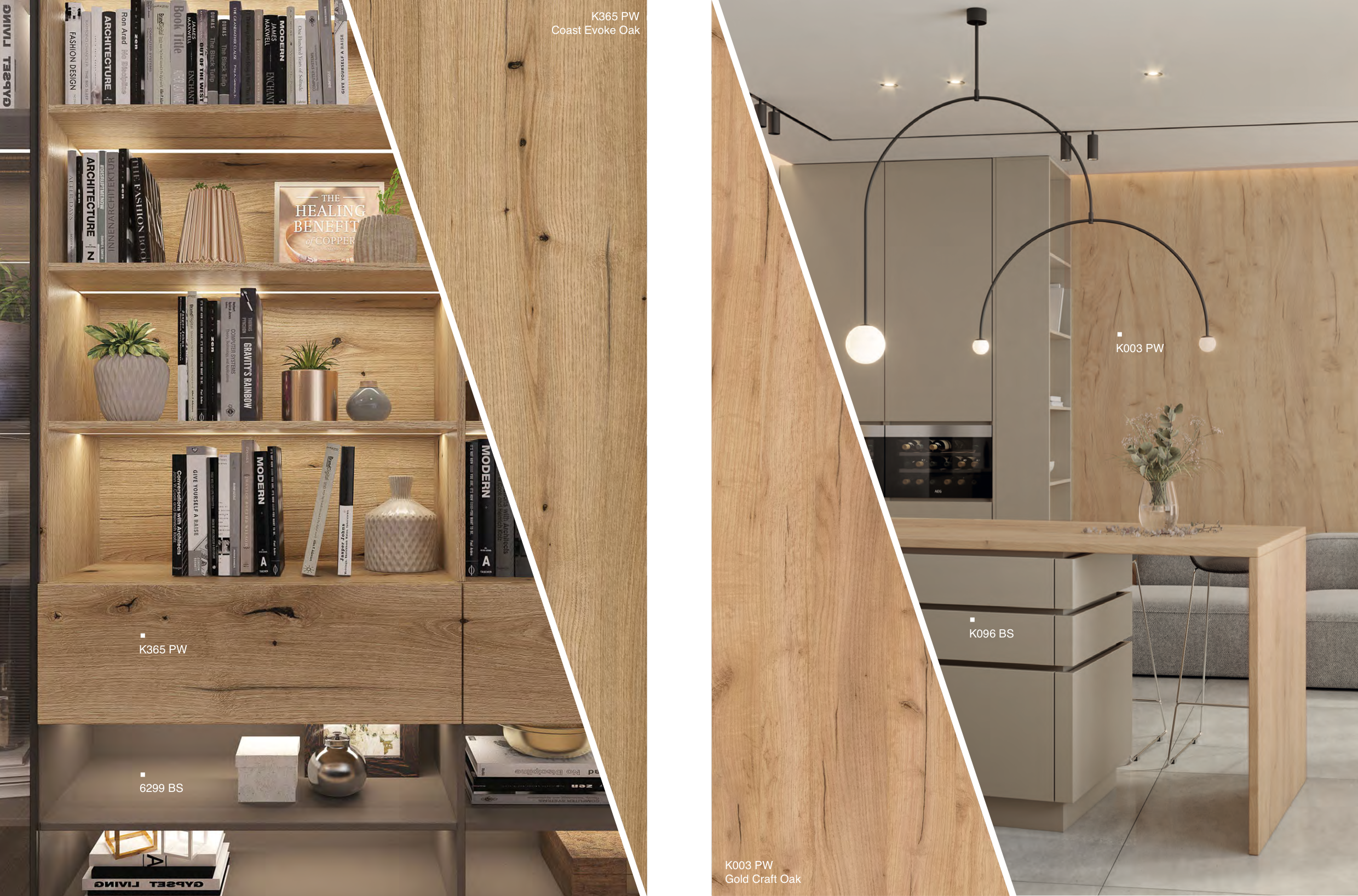
Unlike a raw MDF panel, MFC is supplied with a finished decorative surface. It is available in a wide range of colours, woodgrains, textures and finishes, making it a popular material for furniture and interior applications.
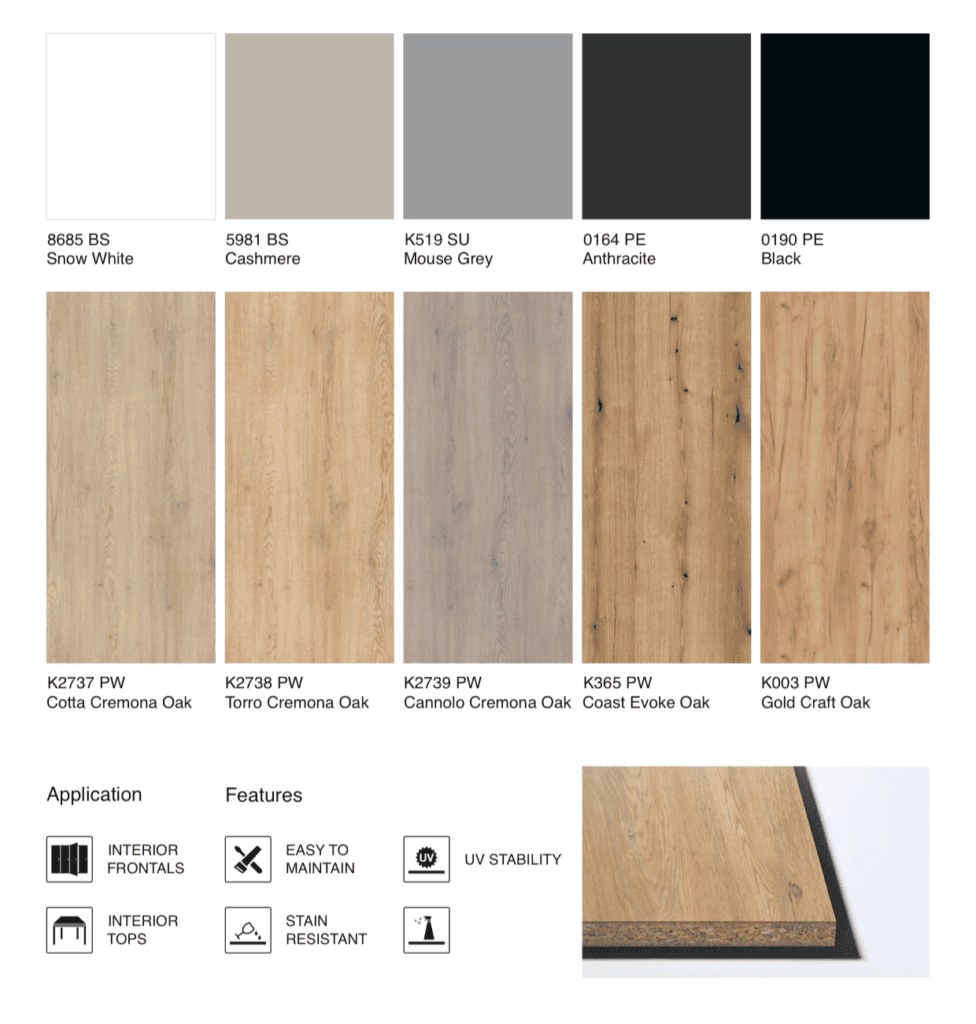
Kronospan describes melamine-faced particleboard as an established material for furniture and interior design, with options including matt, gloss, textured and woodgrain finishes. Its MF PB products also offer characteristics such as UV stability, stain resistance and easy maintenance.
This combination of a practical surface and extensive design choice makes MFC particularly interesting for busy education environments.
MFC vs MDF: what’s the difference?
MDF, or Medium Density Fibreboard, is manufactured from wood fibres compressed with resin to form a dense and consistent board. Its smooth, uniform surface makes it particularly suitable for detailed machining, profiling and painted finishes.
MFC uses a particleboard core with a factory-applied melamine surface.
The important point is that MFC and MDF are not simply competing materials where one is always better than the other. Each has characteristics that make it suitable for different applications.
At Witley Jones, we believe the better question is:
Which material is most appropriate for the furniture, environment and intended use?
That is why material selection forms part of our wider design and manufacturing process. We manufacture furniture using a range of wood-based materials, including plywood, MDF and particleboard, selecting the most appropriate solution for each project. Our wood and wood-based products are legally and sustainably sourced, with FSC and PEFC certification forming part of our approach to responsible sourcing.
Three key benefits of MFC for school furniture
1. Durable and easy to maintain
Schools are demanding environments. Classroom furniture, boarding furniture, storage and communal spaces can experience thousands of interactions every day.
One key advantage of MFC is its finished melamine surface. It provides a hard-wearing, practical finish that is designed for everyday use and is straightforward to clean and maintain.
Kronospan identifies easy maintenance, stain resistance, and UV stability as key features of its melamine-faced particleboard products.
In high-traffic school areas, this can make MFC an attractive option where maintaining both performance and appearance over time matters.
2. Extensive design flexibility
School furniture doesn’t have to be purely functional.
Colour, texture, and finish can all contribute to the character of a learning environment, and MFC offers a particularly broad range of decorative options.
From contemporary colours to natural-looking woodgrains, MFC can help schools create a consistent visual identity across classrooms, libraries, boarding houses, dining areas and communal spaces.
This fits naturally with Witley Jones’ bespoke approach. Our in-house design team works with schools to develop furniture around individual spaces, requirements and budgets, with a wide range of materials, finishes and fittings available.
3. Manufacturing efficiency and value
Because MFC is supplied with its decorative surface already applied, it can reduce the need for additional finishing processes compared with an unfinished MDF panel that requires painting or another surface treatment.
For manufacturers, this can improve production efficiency. For schools, those efficiencies can contribute to overall project value.
However, the lowest initial price isn’t necessarily the best value.
For school furniture, the more important consideration is whole-life value: how well the furniture performs, how long it lasts, how easy it is to maintain and when it might need to be repaired or replaced.
That is why Witley Jones’ approach is focused on combining material efficiency with long-term performance.
What are the cost benefits of MFC for schools?
For schools working within carefully managed capital budgets, material choice can meaningfully affect the overall cost of a furniture project.
Particleboard can provide a cost-effective core material for suitable applications, while the factory-applied melamine finish can reduce the need for additional finishing processes.
This can help make MFC an attractive option where the design and performance requirements of the furniture do not specifically call for MDF.
There can also be longer-term benefits.
Furniture appropriately specified for its environment can help reduce premature repairs, replacement, and associated waste. Witley Jones furniture comes with a 10-year fair wear and tear guarantee, reflecting our confidence in the quality of our materials, designs, and craftsmanship.
For schools, therefore, the conversation should not simply be about MFC vs MDF cost per panel. It should be about the overall balance of purchase cost, manufacturing efficiency, durability, maintenance and expected service life.
How did Witley Jones test MFC?
Introducing a new material into school furniture manufacture requires more than simply assessing how it looks.
Our feasibility work has considered MFC throughout the manufacturing and product-development process.
Material assessment
We began by examining the fundamental properties of MFC, including its construction, surface characteristics, available thicknesses, machinability and suitability for furniture manufacture.
Manufacturing assessment
The next stage was to assess how the material performs within our manufacturing environment.
For Witley Jones, this means considering how effectively it can be cut, machined, drilled and assembled using our equipment and processes.
Material compatibility is critical. A material needs to perform consistently not only as a board, but as part of a complete manufacturing system.
Design and fixing assessment
We also considered how MFC works with our furniture designs and fixing methods.
This is particularly important for applications requiring substantial or high-quality fixings. Board thickness, joint design and fixing systems all contribute to the strength and durability of the finished product.
Our development work has included the use of new Lamello fixing systems, providing an opportunity to assess modern joining techniques alongside MFC.
Prototype and performance testing
Prototype furniture enables us to assess the material as part of a complete product.
This includes examining assembly, joints, fixings, rigidity and the overall performance of the finished design.
Independent testing
Independent testing provides another important layer of reassurance.
Two Witley Jones products – our Double Storage Bunk and Study Bunk – were tested by the Furniture Industry Research Association (FIRA).
Both passed BS EN 747-1:2024 and BS EN 747-2:2024.
These standards cover the safety, strength and durability requirements and test methods for bunk beds and high beds for domestic and non-domestic use.
Crucially, both Witley Jones designs were manufactured using Melamine Faced Particleboard (MF PB) and incorporated our new Lamello fixings.
The successful testing is particularly significant because it demonstrates how the material, fixing system, design and manufacturing process work together as a complete product.
FIRA’s 2024 annual review confirms that EN 747-1:2024 and EN 747-2:2024 are the current standards covering bunk-bed safety, strength, durability, and test methods.
For Witley Jones, safety is central to product development, and independent testing gives confidence that our designs and manufacturing practices meet demanding requirements.
Sustainability: choosing materials responsibly
Material selection is also a significant part of sustainable school furniture.
At Witley Jones, sustainability is considered throughout the process – from design and sourcing through to manufacturing and delivery. We focus on designing furniture for longevity, using responsibly sourced materials and reducing waste.
Our approach also includes considering the sustainability credentials of our supply chain.
Kronospan’s manufacturing model places considerable emphasis on the circular economy. The company states that it prioritises recycled wood, followed by sawmill residues and sustainably sourced forestry wood. Its UK particleboard production uses a high proportion of recycled timber, with its latest published UK sustainability report recording an average of 85% recycled timber content in particleboard production during 2022–23.
Kronospan’s current UK materials information states that its particleboard is manufactured from at least 80% recycled content and highlights ongoing investment in circularity and lower-carbon manufacturing.
For schools looking to reduce waste and improve the environmental performance of their estates, the material story therefore matters.
But sustainability isn’t simply about the material’s origins.
The longer furniture remains in productive use, the fewer replacements are required.
That is why durability is an important part of sustainable furniture design. Witley Jones’ approach is to create furniture that works hard in demanding educational environments and is built to last.
So, should schools choose MFC or MDF?
There isn’t one answer for every application.
MDF remains a highly useful material where its smooth, consistent surface, machining characteristics or suitability for painted finishes are important.
MFC, meanwhile, provides an attractive combination of a durable finished surface, design flexibility, manufacturing efficiency and potential cost advantages.
The most important consideration is selecting the material according to the application.
At Witley Jones, our ongoing material research is about expanding the options available to schools while maintaining the standards of quality, safety and durability expected from our furniture.
With more than 30 years’ experience manufacturing school furniture in Britain, our approach combines in-house design, CNC manufacturing, skilled assembly and installation with a commitment to responsible material selection.
Our successful FIRA testing of the Double Storage Bunk and Study Bunk, manufactured using MFC and Lamello fixings, is another step in that ongoing process.
For schools, the result is greater choice.
For Witley Jones, it means continuing to develop furniture that delivers where it matters most: quality, safety, durability, value, and responsible material selection.
Looking at MFC for your next school furniture project?
Every school has different requirements, from high-traffic classrooms and boarding accommodation to specialist teaching spaces, libraries and communal areas.
Our team can help you assess the most appropriate materials, finishes and furniture solutions for your space, budget and intended use.
Talk to Witley Jones about your next school furniture project.