
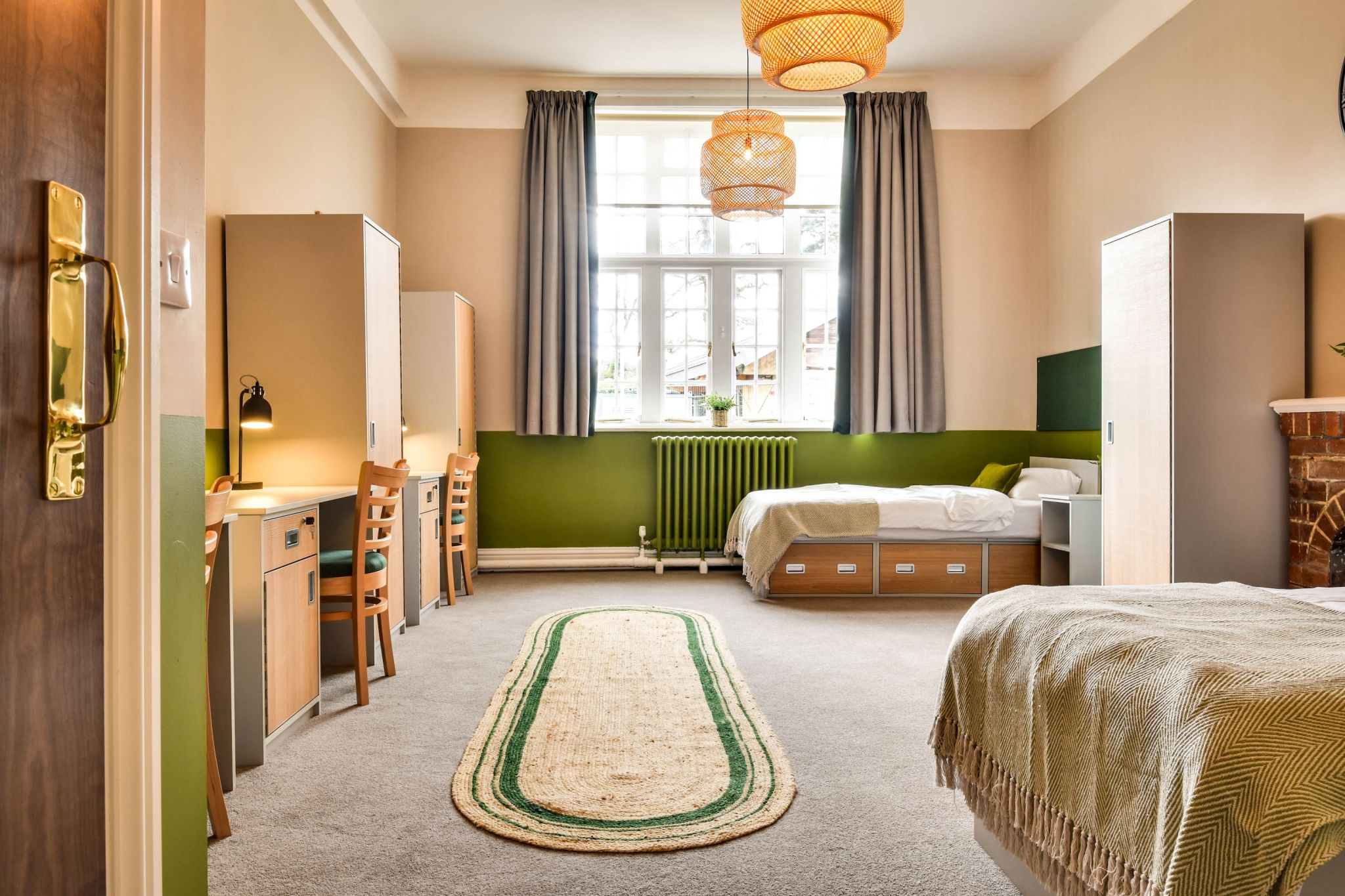
For independent schools, planning a refurbishment is rarely just about deciding what needs replacing. With budgets under increasing pressure, bursars, estates teams and school leaders must balance ambitious plans with careful financial management, ensuring every investment delivers genuine value.
Creating inspiring, practical environments for pupils and staff remains a priority, but how can schools make their budgets go further without compromising on quality?
The answer isn’t necessarily to choose the cheapest furniture or cut back on essential elements. Instead, getting the most from a school refurbishment budget means looking at the bigger picture: from early planning and thoughtful design to manufacturing quality, installation, durability and long-term maintenance.
As Matt Jones and Dave Manser, directors of Witley Jones, discussed during their appearance on the ISBA podcast, the decisions schools make at the beginning of a project can have a significant impact on its overall cost and success.
Listen to the full conversation below:
Here, we explore some of the key considerations from their conversation and share practical advice to help schools make informed refurbishment decisions.
1. Start planning earlier than you think
One of the easiest ways for a refurbishment project to become more expensive is to leave planning too late.
Schools often have relatively short installation windows, particularly when furniture projects need to be completed during the summer holidays. However, surveys, design development, manufacturing and coordination with other contractors all take time.
Leaving these decisions until the last minute can restrict supplier availability, reduce the time available to explore different solutions and potentially result in compromises that could have been avoided.
Early engagement with a furniture specialist gives schools more opportunity to:
- Arrange detailed site surveys and establish accurate requirements.
- Develop designs and specifications that make the best use of available space.
- Coordinate furniture requirements with building contractors and other trades.
- Plan delivery and installation around school holiday periods.
- Secure manufacturing capacity ahead of busy periods.
- Explore opportunities to optimise budgets through better production scheduling.
As Matt and Dave explained on the ISBA podcast:
“Early engagement can mean a school can use their preferred supplier – every supplier will have finite resources and will reach capacity at some point, especially during the summer months when it’s incredibly busy.”
Starting conversations early can also create opportunities to coordinate manufacturing during traditionally quieter periods, potentially offering additional value.
At Witley Jones, early consultation, site surveys and in-house design planning help schools understand their options before committing to a specification. Working alongside the wider project team also helps ensure furniture requirements are properly integrated into the refurbishment from the outset.
Find out more about our Design and Installation Process.
2. Look beyond the initial price tag
When comparing school refurbishment costs, it can be tempting to focus on the unit price of individual furniture items. However, the cheapest quotation doesn’t necessarily represent the best investment.
Furniture used in schools faces considerable daily demands. Classrooms, boarding houses, libraries and shared spaces all need products that can withstand frequent use while remaining functional and attractive.
A lower initial price might appear appealing, but if the furniture requires regular repairs or needs replacing after only a few years, the overall cost can quickly increase.
Instead, schools should consider the whole-life cost of their furniture investment, taking into account:
- Material quality: Are the materials suitable for busy educational environments?
- Construction: Is the furniture designed and manufactured to withstand regular use?
- Durability: How long can the school realistically expect the furniture to last?
- Maintenance: Will products need frequent repairs or specialist attention?
- Guarantees: What protection is provided against manufacturing defects?
- Replacement costs: What might the school spend if furniture needs replacing prematurely?
Matt and Dave highlighted the importance of looking beyond individual prices during their podcast discussion:
“It’s looking further than the unit costs themselves and looking at the whole lifespan of furniture, it’s rare that there isn’t real justification behind pricing.”
They also made an important point about the potential lifespan of well-made furniture:
“They can be tested to the point of destruction, so although a unit cost might seem expensive, if the furniture lasts 20 years, it often works out cheaper.”
This is where manufacturing expertise and product quality become particularly important.
At Witley Jones, British manufacturing and quality craftsmanship are central to creating furniture designed for educational environments. With a 10-year furniture guarantee, schools also benefit from additional reassurance when making a long-term investment.
Tested for strength, safety and longevity
Quality manufacturing should be supported by rigorous product testing. Witley Jones works with the Furniture Industry Research Association (FIRA) to ensure furniture is tested for strength, safety and longevity, with products put through demanding tests to the point of failure. This helps demonstrate that furniture meets the performance standards required for busy educational environments.
Combined with high-quality fittings and hardware, this rigorous approach to testing helps ensure furniture is built to withstand the demands of everyday school life, supporting a longer service life and better whole-life value for schools.
Choosing furniture that is built to last can help reduce unnecessary replacement costs and deliver better value over the lifetime of a school refurbishment.
Discover more about Witley Jones and our manufacturing expertise.
3. Understand exactly what is included in your quotation
Two furniture quotations might appear similar on paper, but the services included can differ considerably.
When assessing suppliers, it’s important to understand precisely what you’re paying for and whether additional costs could arise as the project progresses.
For example, does the quotation cover the initial site survey, design development and space planning, or are these charged separately? Is delivery and installation included? What happens if the school’s requirements change?
These details can make a significant difference to the overall project budget.
Before making a decision, bursars and estates teams should consider asking suppliers:
- Does the quotation include a full site survey?
- Is design and space planning included?
- Will we receive floor plans, furniture drawings or 3D visualisations?
- Are delivery and installation covered?
- Are there additional project management charges?
- How are changes to the specification or requirements handled?
- What aftercare and guarantees are provided?
- Is the furniture manufactured in-house or sourced from third parties?
As Matt and Dave explained:
“If something appears to be the same furniture from two different suppliers, I’d ask the question: Is that supplier willing to come and undertake a full survey of the whole project and allow you to plan things accordingly, and will they produce floor plans, itemised furniture drawings, 3d renders that can help sell a project to major stakeholders?”
They also highlighted the importance of transparency and flexibility:
“They can tailor solutions right from the outset; often, it’s not just the furniture it could be the delivery and installation package that could be tailored too.”
A comprehensive service can provide considerable value beyond the furniture itself. Having consultation, design, manufacturing, delivery and installation managed as part of a coordinated process can help reduce complexity and make budgeting more straightforward.
The key is to compare like-for-like quotations. A slightly higher initial figure may represent considerably better value if it includes services that would otherwise need to be sourced and paid for separately.
4. Design spaces around the people who use them
A successful school refurbishment should improve how a space works, not simply how it looks.
Before finalising a furniture specification, schools should consider how pupils, teaching staff and support teams use the space throughout the day. Understanding their needs can help identify practical improvements that might otherwise be overlooked.
For example:
- Classrooms: Does the furniture support different teaching styles, group activities and independent learning?
- Storage: Is equipment accessible and organised, without taking up valuable teaching space?
- Boarding accommodation: Does the furniture create a welcoming, comfortable and practical environment?
- Libraries and shared spaces: Can the layout accommodate different activities and groups of users?
- Specialist areas: Does the furniture integrate the technology, services and equipment required?
Consulting end users during the design process can be particularly valuable. Their feedback can help ensure that the finished environment works in practice, rather than simply meeting the requirements of an initial brief.
Matt and Dave shared an example from a project at The Downs School in Malvern, where students were directly involved in the furniture selection process:
“We did a furniture project at the Downs School in Malvern and engaged directly with students to bring them along as part of the process so we could really drill down on material swatches and get the end users fully involved and immersed in the whole experience.”
This approach demonstrates the benefits of involving the people who will use the finished space. It can help schools make more informed decisions about materials, finishes and functionality while giving pupils a sense of ownership over their environment.
Many of our projects show how bespoke school furniture and considered space planning can also help schools make better use of existing buildings, particularly where unusual layouts, awkward dimensions or underused areas present challenges.
5. Build flexibility into your investment
Schools are constantly evolving. Teaching approaches change, technology develops and the way spaces are used can shift considerably over time.
For this reason, furniture should ideally be designed with future requirements in mind.
A classroom that works perfectly for one subject or teaching style may need to accommodate something entirely different the following day. Similarly, a shared space might be used for lessons, meetings, extracurricular activities or events.
Building flexibility into a refurbishment can help schools avoid the expense of redesigning or replacing furniture whenever their requirements change.
Consider incorporating:
- Lightweight, mobile furniture that can be moved easily.
- Adaptable classroom layouts that support different teaching activities.
- Multi-purpose spaces that can serve several functions.
- Flexible storage solutions that accommodate changing equipment requirements.
- Furniture that makes the best possible use of existing floor space.
Matt and Dave discussed how important adaptability has become in modern educational environments:
“I think one of the main things in modern-day schools now is to make areas as multi-use as possible, consider the changing needs of the school – maybe use a classroom for one subject one day and then something else the next, so we’re always looking for furniture to be as agile as possible, so that could mean making the furniture lightweight and mobile so that they can change things around as quickly as they want.”
They also highlighted the growing role of integrated teaching walls in classroom design.
These solutions bring storage, teaching resources and interactive screens together along one wall, helping to keep classrooms organised while making the wider space available for alternative activities.
As Matt and Dave explained:
“One of the big moves we’ve seen in the past 5 to 10 years has been the integration of teaching walls in classroom spaces, a media wall similar to those people put into houses, so you put all storage along one wall. This includes an interactive screen, so everything you need for that class is along one wall, which can be locked away securely.”
This type of considered design can help schools maximise the functionality of existing spaces and potentially create additional opportunities, including hiring out facilities for other uses.
The principle is simple: don’t design a space solely around today’s requirements. Think about how it might need to work in five or ten years’ time.
6. Make sustainability part of the decision
Sustainability is increasingly important when planning an independent school refurbishment, but it should also be considered alongside financial value.
Furniture that is designed to last, manufactured responsibly and maintained effectively can help schools reduce waste and avoid unnecessary replacement.
Rather than treating sustainability as a separate consideration, schools should look at the entire lifecycle of the products they purchase.
Important questions include:
- Are materials responsibly and legally sourced?
- Is timber obtained from sustainable sources?
- Where is the furniture manufactured?
- Are manufacturing processes designed to minimise waste?
- Can furniture be repaired or refurbished rather than replaced?
- What happens to products at the end of their useful life?
British manufacturing can offer additional reassurance around production standards, employment practices, health and safety requirements and supply chain transparency.
Matt and Dave raised an important point about the wider responsibilities involved in choosing a furniture supplier:
“There’s a moral question about whether the furniture supplier is using legal and sustainably sourced timber. Do they manufacture in the UK, so do they adhere to UK employment law and Health and Safety standards, inspections and the duty of care and training that you abide by in the UK?”
At Witley Jones, responsible timber sourcing, British manufacturing and a focus on furniture longevity all contribute to a more considered approach to school furniture design.
By prioritising quality, repairability and responsible sourcing, schools can make purchasing decisions that support both their financial objectives and wider sustainability commitments.
Find out more about our approach to Sustainability.
Better planning leads to better value
Getting the most from a school refurbishment budget isn’t about spending as little as possible. It’s about making informed decisions that deliver the greatest long-term benefit.
From engaging furniture specialists early and understanding the full scope of a quotation to prioritising durability, involving end users and designing adaptable spaces, every stage of a project presents an opportunity to improve value.
The most successful refurbishments bring together thoughtful design, transparent pricing, quality manufacturing and a clear understanding of how the finished environment needs to function.
Ultimately, the real cost of a school refurbishment isn’t just what you spend today. It’s what that investment delivers over the years ahead.
At Witley Jones, we understand the importance of making every investment count. With experience in school furniture design, British manufacturing and a comprehensive service covering consultation, design, production and installation, we work alongside schools to develop solutions that meet their needs, priorities and budgets.
Whether you’re planning a complete refurbishment, updating individual classrooms or looking to make better use of existing spaces, involving the right partner early can make all the difference.
Planning a school refurbishment? Speak to the Witley Jones team about how we can help you make informed decisions and get more from your furniture investment.