
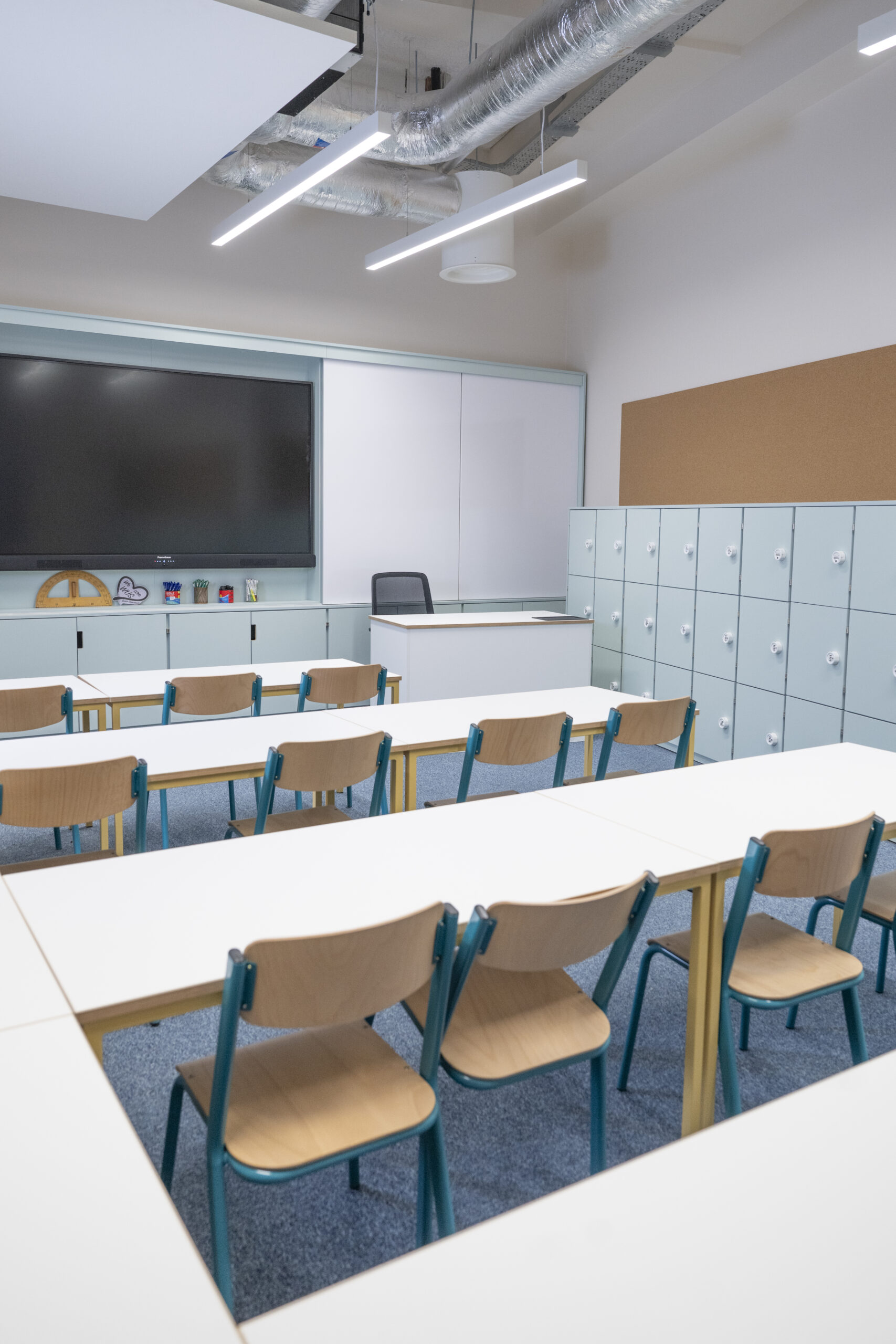
When a classroom feels cramped, cluttered or difficult to organise, adding more cupboards is not always the best answer. How you position storage can matter as much as how much storage you have.
For many schools, classroom wall storage offers an opportunity to use the space already available more effectively. Moving storage off the floor and into the walls can free up valuable teaching space, reduce visual clutter, and create a more flexible environment.
But should you choose standalone cupboards, fitted classroom storage walls or a complete teaching wall?
The answer depends on your available space, budget, teaching requirements and plans for the classroom in the future.
In this guide, we look at the differences between the three options and explain when each may be the most appropriate solution.
The three main classroom storage options
Schools generally have three approaches to consider when looking at storage:
- Standalone classroom storage, such as mobile cupboards, bookcases and tray units
- Fitted classroom storage walls, designed to make maximum use of available wall space
- Teaching walls, which combine storage with teaching technology, whiteboards and display space
Each has its advantages. The important thing is to choose a solution based on how the room actually needs to work rather than simply replacing existing furniture like-for-like.
What is standalone classroom storage?
Standalone storage is the most familiar option. It includes freestanding furniture such as mobile cupboards, tray units, bookcases and lockers that can be positioned around the classroom.
For schools that need a straightforward storage solution without making significant changes to the room, standalone furniture can be practical.
The advantages of standalone storage
Lower initial cost
Freestanding furniture can often be introduced gradually, making it suitable where budgets are limited or storage needs to be addressed quickly.
Easy to move
Mobile cupboards, bookcases and tray units can be repositioned if the classroom layout changes. This can be particularly useful in schools where rooms are regularly used for different year groups or subjects.
Suitable for changing classrooms
If a room is likely to change purpose in the near future, a freestanding solution may provide useful flexibility without committing to a permanent fitted installation.
The disadvantages
The main limitation is that standalone furniture occupies floor space.
As more cupboards and bookcases are added, circulation areas can become restricted and the room can start to feel crowded. Freestanding units also do not necessarily make use of the full height or width of a wall.
Technology can present another challenge. A collection of standalone cupboards does not automatically provide a focal point for an interactive screen, whiteboard, teacher storage and presentation equipment.
For schools already struggling with limited floor space, this can make standalone storage less effective in the long term.
What are fitted classroom storage walls?
Fitted storage walls take a different approach. Instead of placing individual cupboards and bookcases around the room, furniture is designed to fit a specific wall or section of the classroom.
This could include:
- Full-height cupboards
- Open shelving
- Display shelving
- Teacher storage
- Lockable cupboards
- Tray storage
- Adjustable shelving
- Storage for classroom resources and equipment
The key advantage is that the furniture is designed around the room rather than the room being forced to accommodate standard-sized furniture.
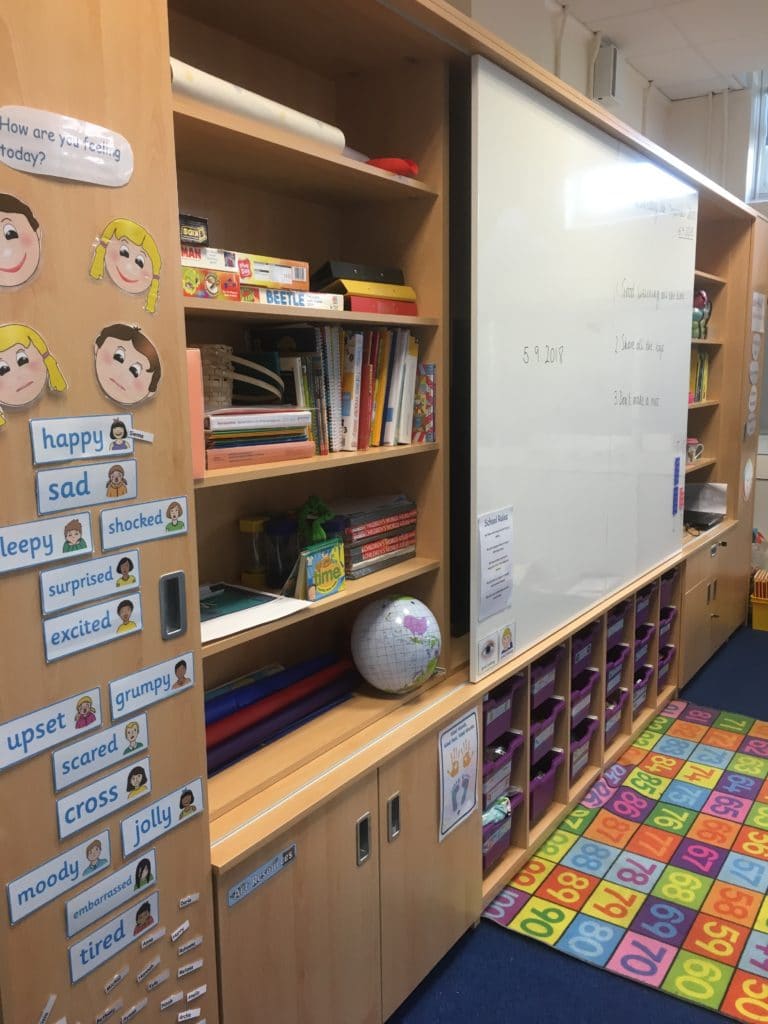
This can be particularly valuable in older school buildings, where classrooms may have awkward corners, chimney breasts, uneven walls, radiators, windows or other features that make standard furniture difficult to position effectively.
Our approach to bespoke classroom furniture is to understand individual requirements and design furniture around the space. Their classroom furniture service includes space-efficient storage and made-to-order solutions designed to maximise the available area.
When are storage walls the best option?
A fitted storage wall is a strong choice when storage is the top priority.
For example, a school may already have its interactive screens and whiteboards positioned elsewhere but need substantially more room for books, exercise books, teaching resources and equipment.
A storage wall can consolidate these resources in one location while keeping them organised and, where appropriate, concealed behind doors.
This can help create a calmer classroom without taking additional floor space.
It can also make better use of areas that would otherwise be difficult to use. Witley Jones highlights the value of bespoke furniture in challenging school environments, where unusual layouts, restricted spaces and multi-purpose areas can make conventional furniture unsuitable.
Related reading: Smarter Spaces, Better Learning: Revolutionising Challenging School Environments with Custom Furniture
What is a teaching wall?
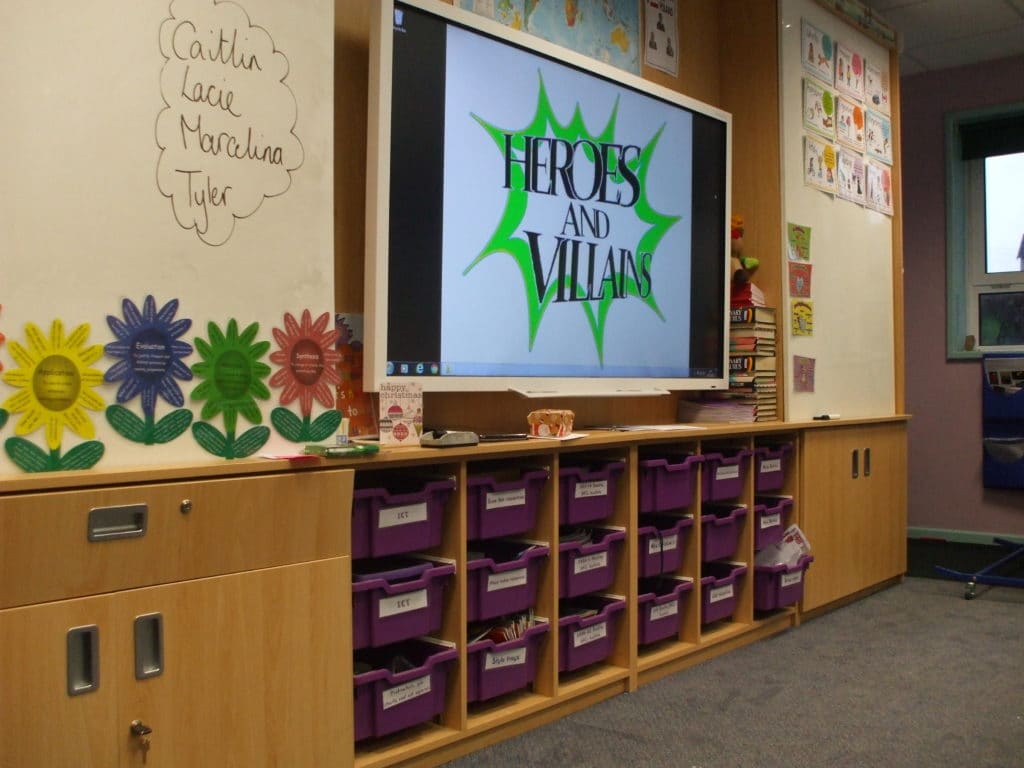
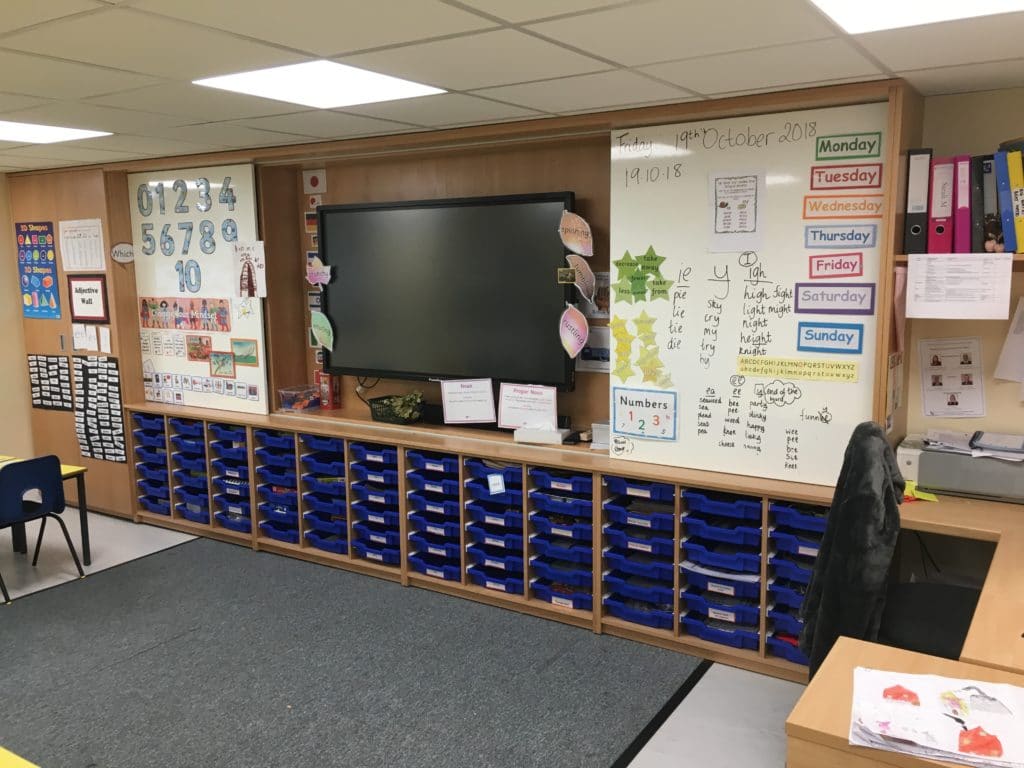
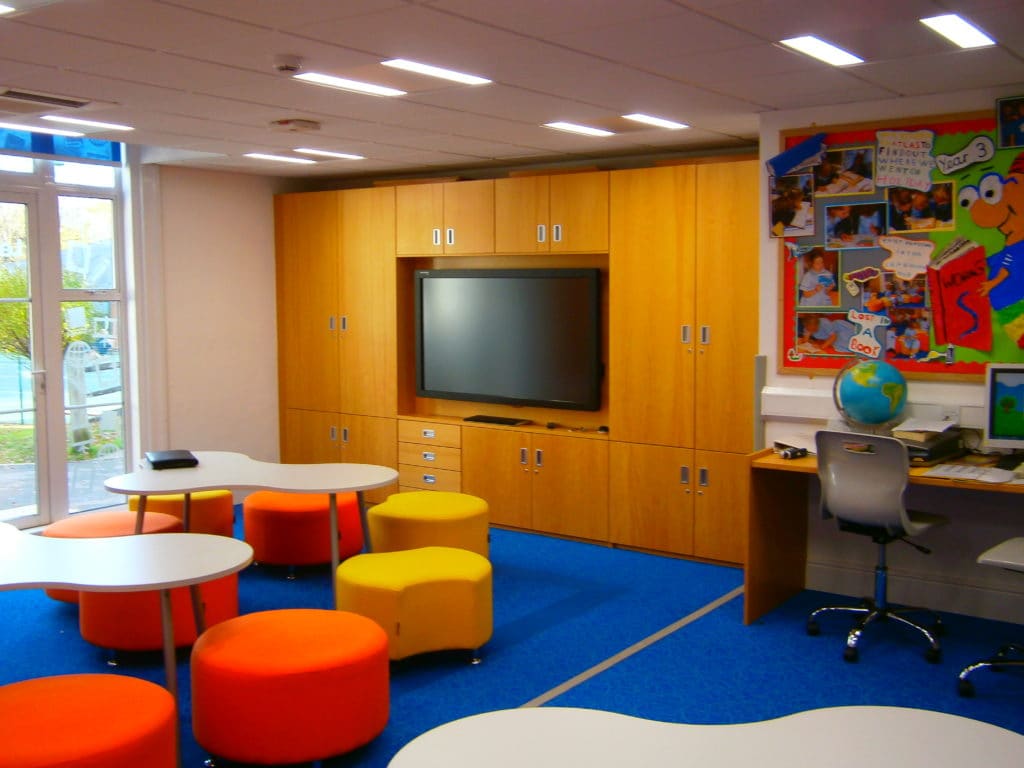
A teaching wall takes the idea of classroom wall storage one step further.
Rather than providing storage alone, a teaching wall combines several functions into a single focal point within the classroom.
Depending on the school’s requirements, this can include:
- Classroom wall storage
- Whiteboards
- Interactive screens
- Teacher storage
- Display space
- Bookcases and shelving
- Tray units
- Lockable cupboards
- Integrated technology and electrics
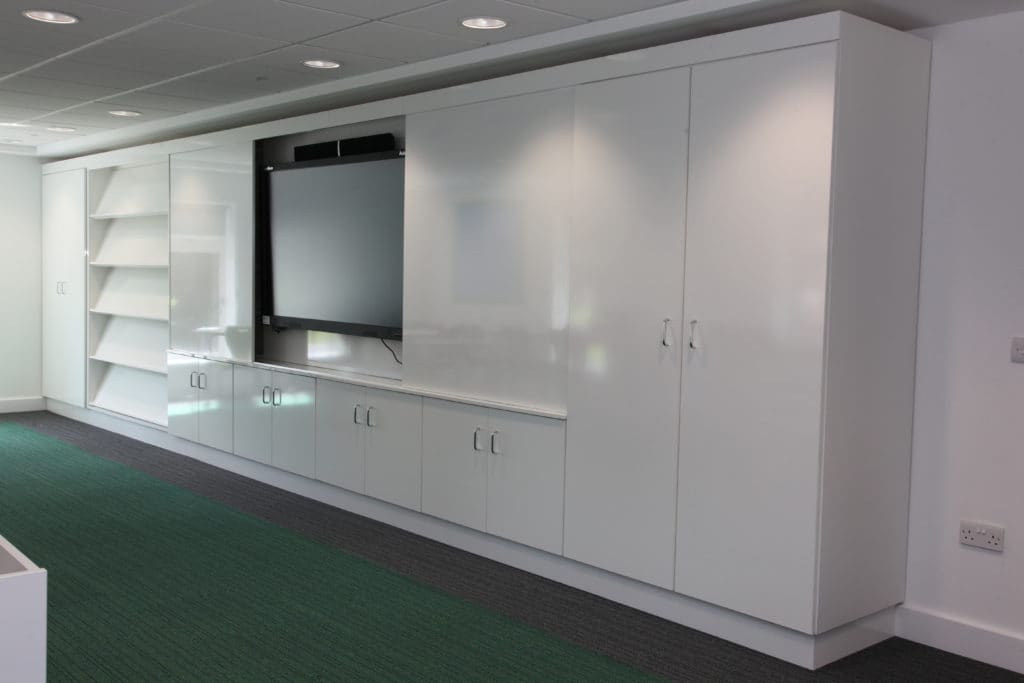
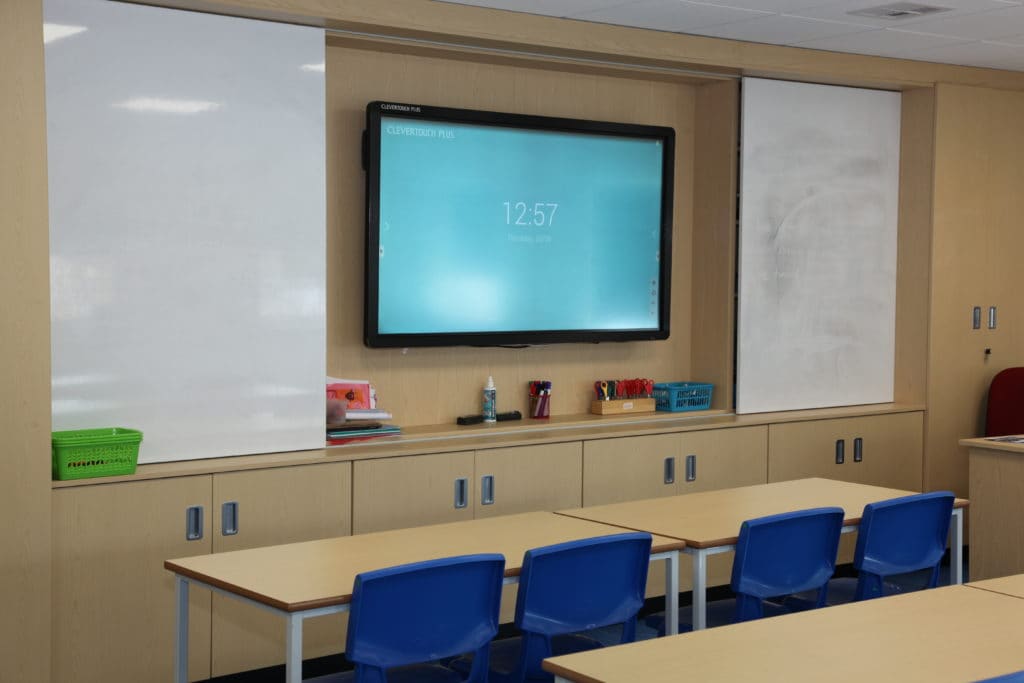
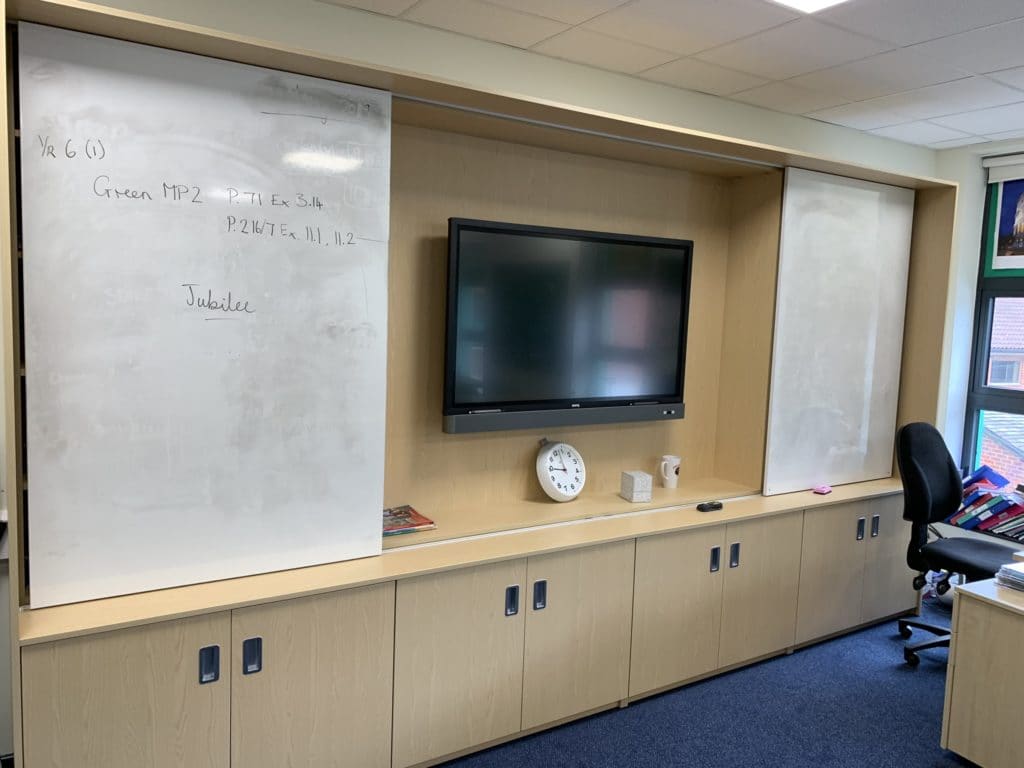
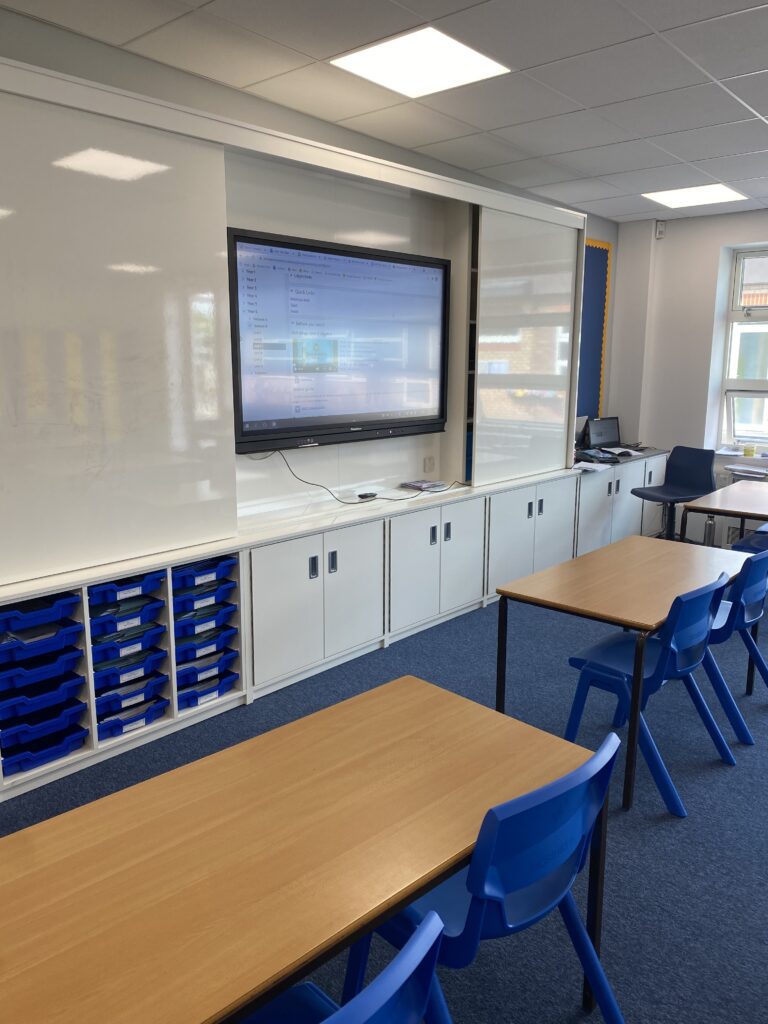
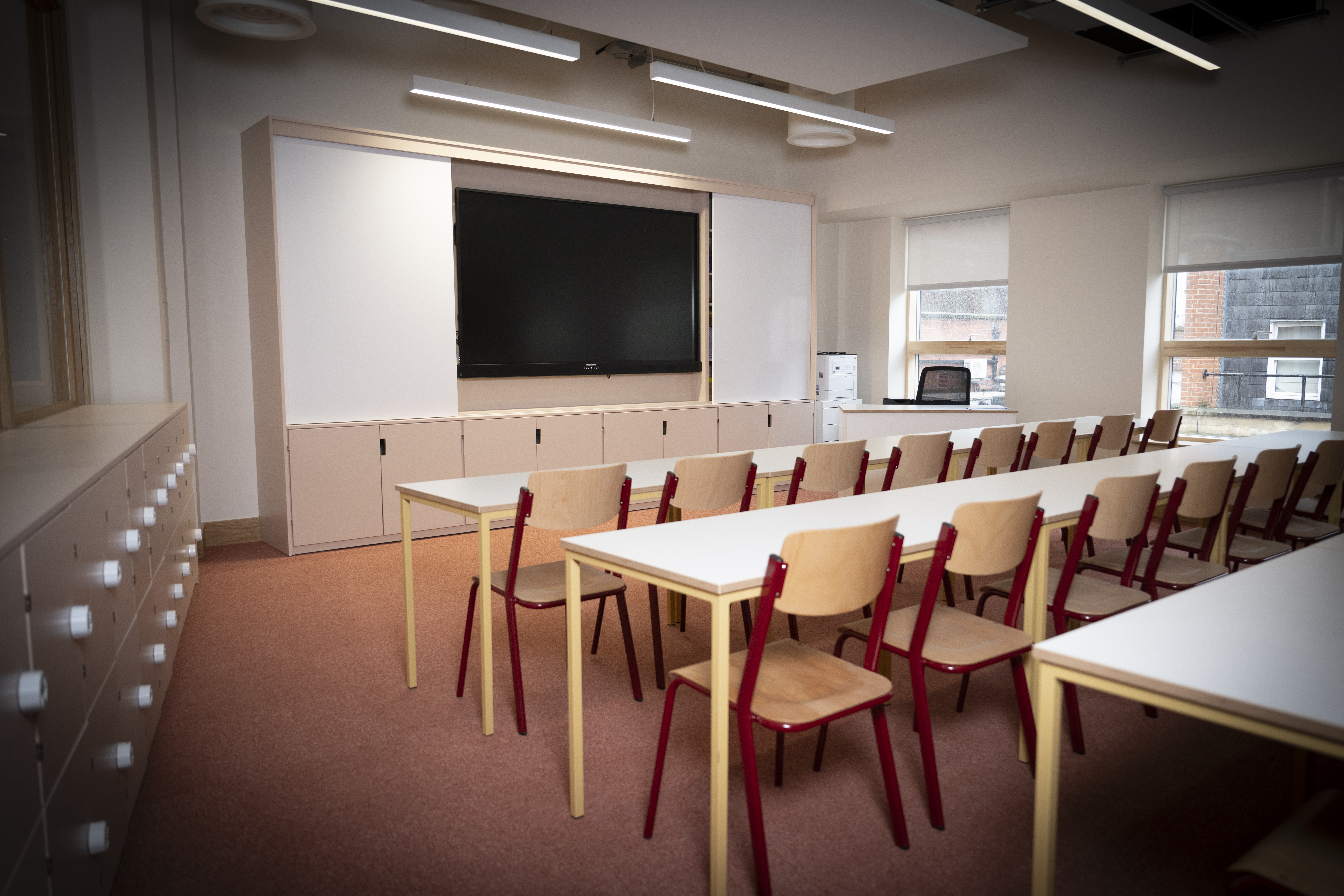
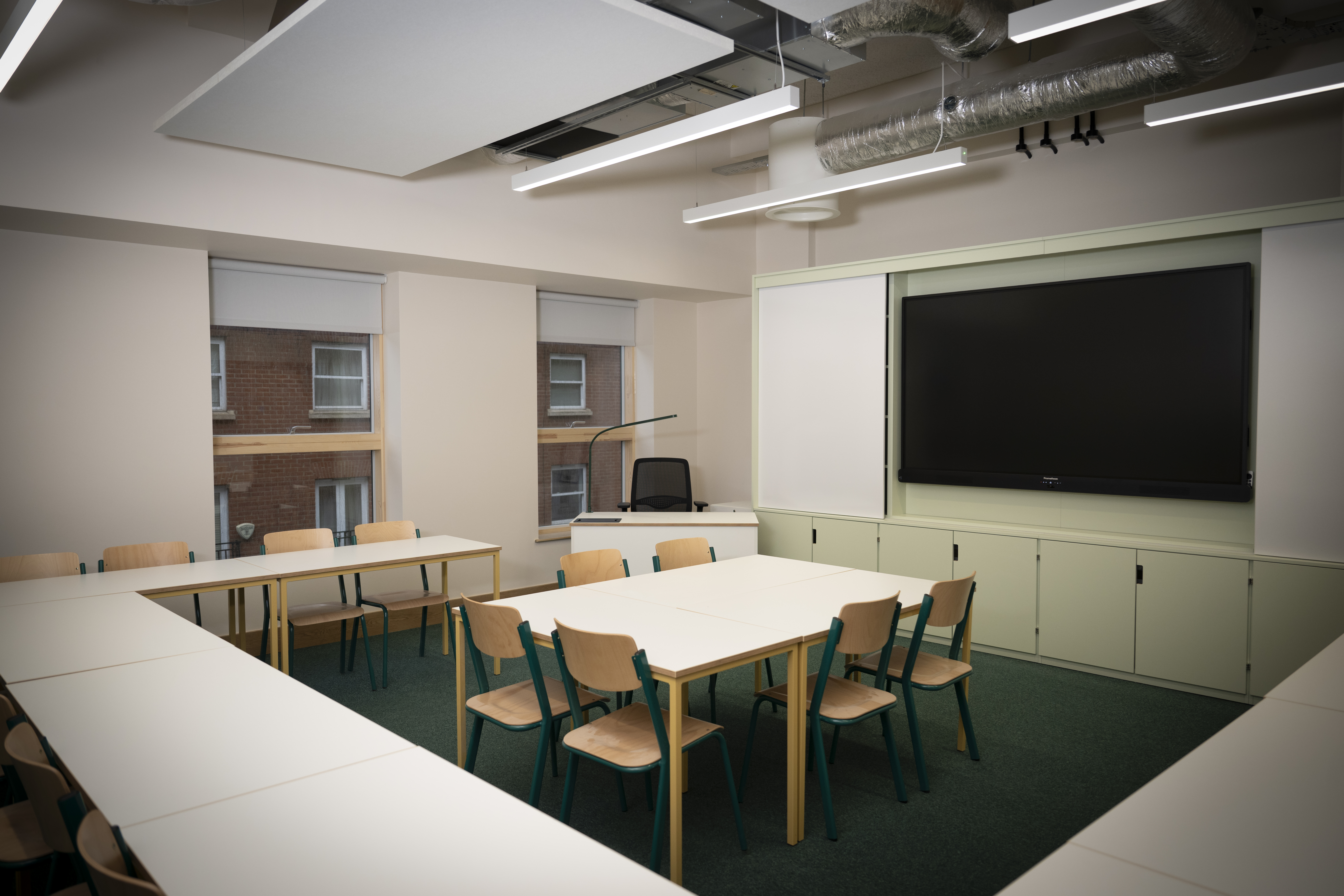
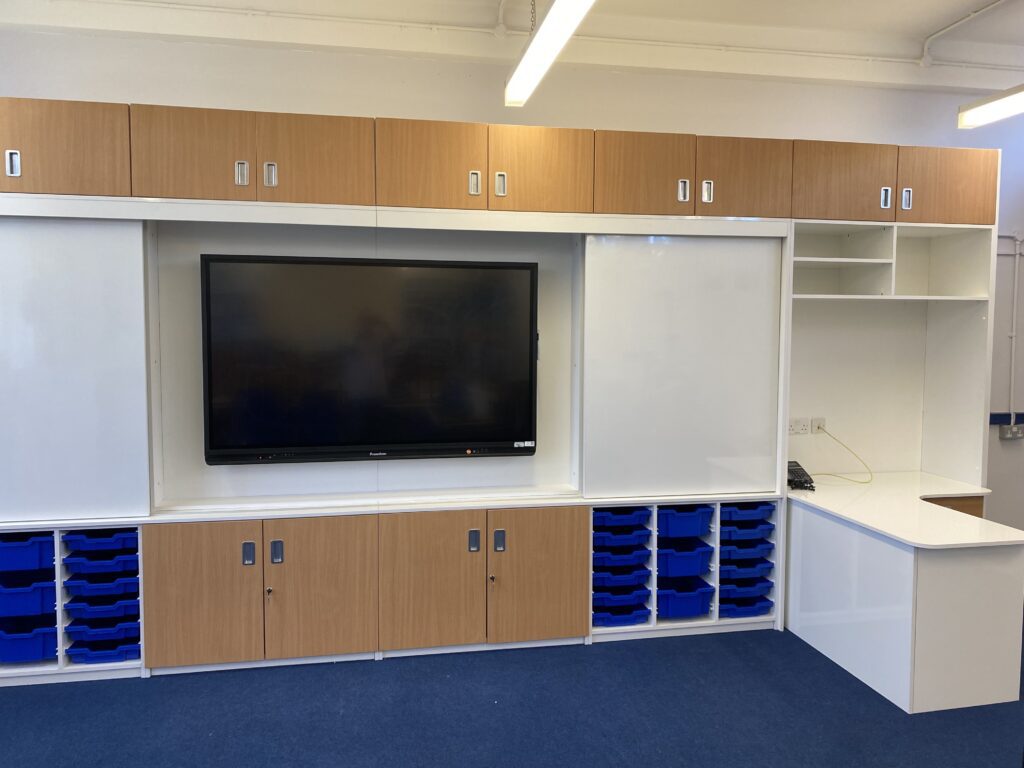
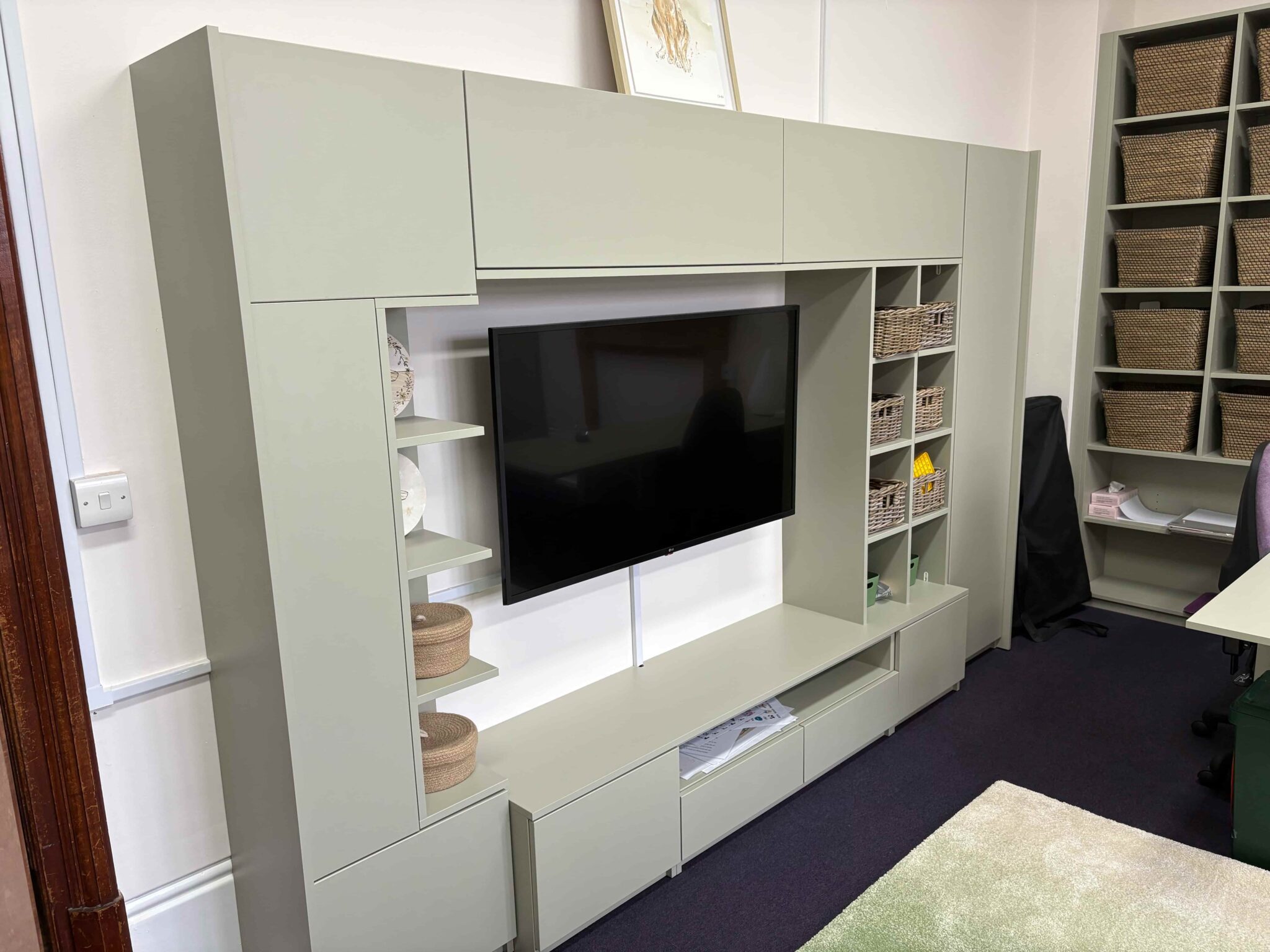
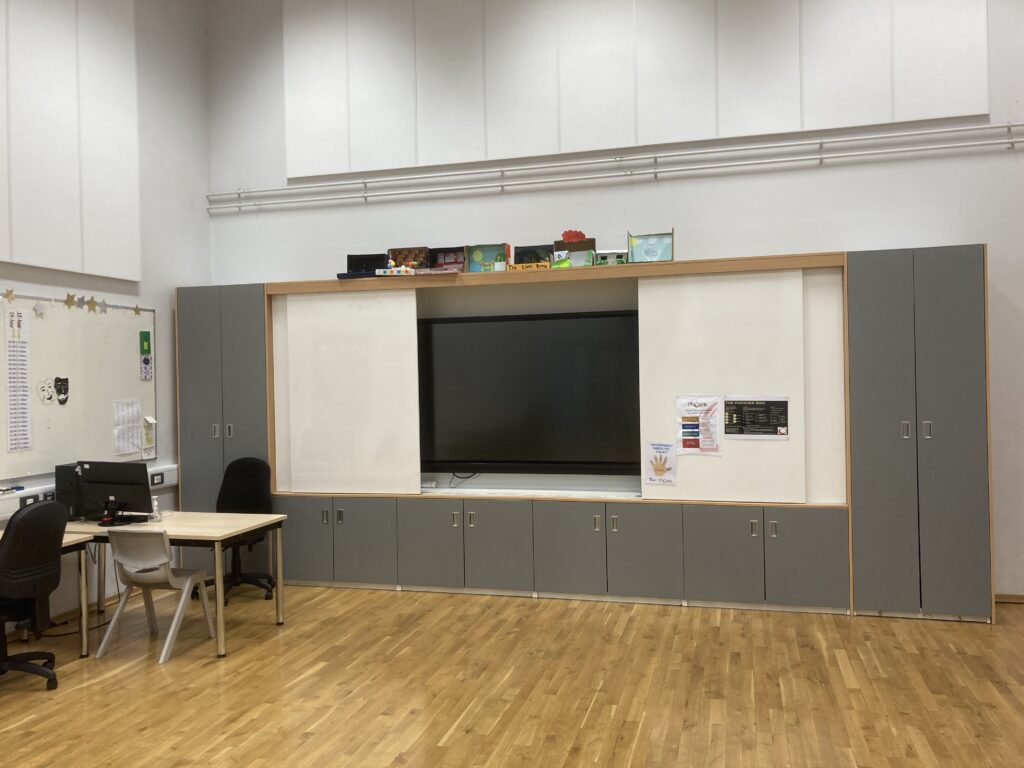
We would describe teaching walls as a combination of storage and technology, with interactive whiteboards and other classroom technology integrated into the design. Sliding whiteboard doors can also conceal technology and storage when not in use.
The result is a much more unified classroom layout. Instead of having a screen on one wall, cupboards on another and teaching resources distributed around the room, key functions can be brought together.
Why choose a teaching wall?
One of the biggest advantages is flexibility.
When storage, technology and presentation equipment are concentrated in one area, the rest of the classroom can be used more freely. Tables can be rearranged for collaborative activities, group work or different teaching styles without having to work around multiple pieces of large furniture.
A teaching wall can also help create a clear focal point for lessons.
There are practical advantages beyond everyday teaching, too. Storage and technology can be concealed behind doors when required, helping a classroom change from a teaching environment into a different type of space.
For schools that hire rooms to external organisations, for example, a classroom may need to become a meeting, drama, workshop or community space outside normal teaching hours. A teaching wall can help make that transition easier by allowing equipment and resources to be stored neatly away.
Teaching walls and technology
Technology is increasingly an important consideration when planning classroom furniture.
Rather than treating the interactive display as a separate item, a teaching wall can be designed around the screen from the beginning. This allows the surrounding storage, whiteboards, shelving and electrical requirements to work together.
Our teaching wall designs can integrate existing or new classroom technology, while reinforced screen sections and integrated electrics can be incorporated into the furniture design.
This approach can also make the classroom feel less cluttered because cables, equipment and resources can be planned into the overall design.
Teaching wall or storage wall: what’s the difference?
The terms are sometimes used interchangeably, but there is an important distinction.
A storage wall is primarily designed to provide additional storage and make better use of wall space.
A teaching wall incorporates storage but also creates a teaching focal point, typically integrating a whiteboard, interactive display or other presentation technology.
In simple terms:
| Solution | Main purpose | Best suited to |
|---|---|---|
| Standalone storage | Flexible, accessible storage | Changing rooms or limited budgets |
| Storage wall | Maximum wall-based storage | Schools prioritising organisation and floor space |
| Teaching wall | Storage + technology + teaching | Refurbished or modernised classrooms |
Which option is right for your school?
There is no single answer for every classroom. The right solution depends on what you need the space to achieve.
Choose standalone storage if…
Standalone furniture may be appropriate if:
- Your budget is limited
- The classroom layout changes frequently
- You need a temporary storage solution
- You want furniture that can be moved between rooms
- Your existing teaching technology is already well positioned
It can be a sensible starting point where flexibility is more important than maximising every centimetre of wall space.
Choose fitted storage walls if…
A fitted storage wall may be the better option if:
- Storage is your main priority
- Your classroom has limited floor space
- You need better classroom organisation
- You have large quantities of teaching resources
- You want to make use of awkward or unused wall space
- Your technology is already located elsewhere
For older buildings or unusual room layouts, bespoke furniture can be particularly valuable because the design can account for features that standard products cannot easily accommodate.
Choose a teaching wall if…
A teaching wall is worth considering if you are:
- Refurbishing classrooms
- Modernising learning spaces
- Installing interactive displays
- Looking for a clutter-free classroom
- Integrating technology and storage
- Creating a more flexible teaching environment
- Trying to maximise usable floor space
It can be particularly effective where a school wants one coordinated solution rather than several separate pieces of furniture.
What can schools learn from real teaching wall projects?
Looking at completed projects can be useful when deciding which approach is right for your own school.
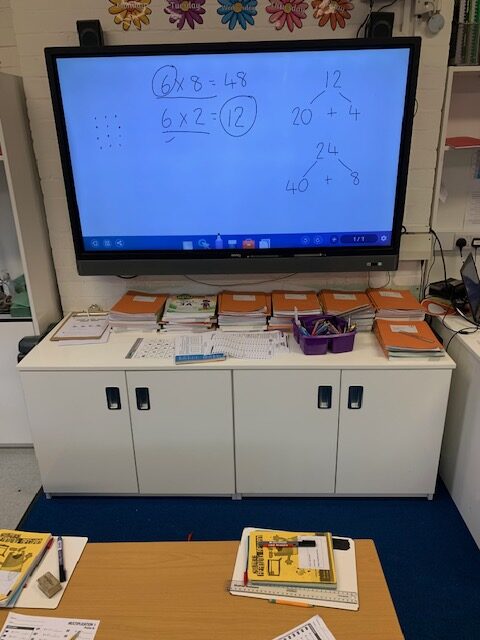
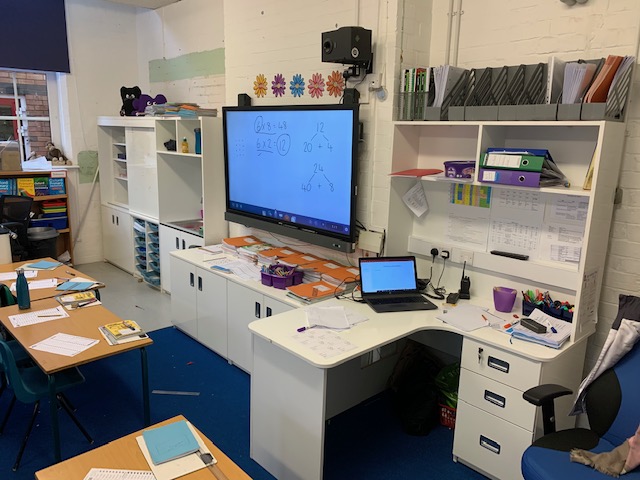
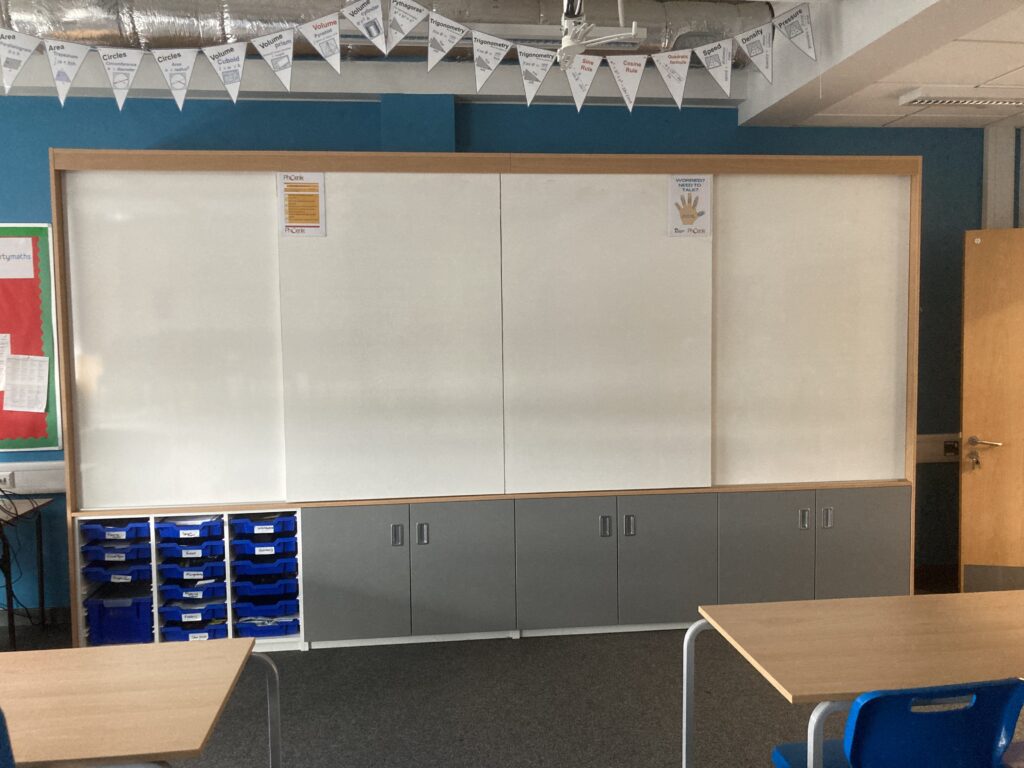
At Phoenix Collegiate, Witley Jones designed and installed 110 bespoke teaching walls. The project included standard classroom designs as well as adapted solutions for science, food technology and drama spaces. The teaching walls incorporated cupboards, shelving, tray storage and sliding whiteboard doors, with designs adapted to deal with features such as radiators and different room configurations.
At Little Harrowden Community Primary School, bespoke teaching walls were designed around two very different classroom requirements. One had to accommodate a chimney breast and AV equipment, while another needed a sink integrated into the design. This demonstrates why a bespoke approach can be useful when standard furniture cannot easily accommodate the existing building.
The project at Westminster School provides another example of how thoughtful storage design can contribute to a wider learning environment. The school’s new learning environment incorporated storage and lockers into classroom areas rather than relying solely on conventional locker rooms, helping to make creative use of the available space.
Witley Jones has also worked with The Hall School in London on a classroom refurbishment project involving three teaching walls.
And at Epsom College, Witley Jones supplied bespoke furniture as part of a wider refurbishment programme. The school’s Bursar highlighted the company’s flexible approach to installation and ability to work around challenges during refurbishment projects.
Why are schools investing in wall-based storage?
The move towards classroom storage walls and teaching walls is not simply about making rooms look tidier.
Good storage design can have a practical impact on how a classroom functions.
Better use of floor space
Moving storage upwards and using available wall space can leave more room for desks, movement and different classroom layouts.
Reduced clutter
Resources can have a defined place rather than being distributed around the classroom. Cupboards and doors can also conceal equipment when it is not needed.
Easier classroom organisation
When teaching resources, books and equipment are organised logically, teachers can spend less time searching for what they need.
Improved flexibility
A well-designed room can accommodate different teaching arrangements. Tables can be moved, activities can change and the space can potentially serve multiple purposes.
Support for modern teaching methods
Integrated screens, whiteboards and storage can provide a central teaching point while leaving more flexibility around the rest of the room.
A future-focused investment
Classroom furniture needs to last for years, so it is worth considering not only what the room needs today but how it might be used in the future.
A bespoke design can provide the flexibility to accommodate changes in technology, room usage and teaching requirements.
Witley Jones’ approach is centred on designing furniture around individual spaces rather than relying solely on standard-sized products. Its classroom furniture service includes made-to-order solutions, integrated electrics and space-efficient storage.
Planning your classroom storage project
Whichever option you choose, planning is important.
Before selecting furniture, consider:
How much storage do you actually need?
Take stock of books, teaching resources, equipment, personal belongings and technology. This will help determine whether you need additional cupboards, shelving, tray storage or lockable units.
How is the classroom currently used?
Look at how teachers and pupils move through the room. Identify areas that become congested and furniture that gets in the way.
What technology needs to be incorporated?
If you are installing or replacing an interactive screen, consider its position and how power, cables and surrounding storage will be accommodated.
Are there any awkward features?
Windows, radiators, doors, chimney breasts and unusual room dimensions can all affect the design.
How might the space be used in the future?
A classroom may eventually need to accommodate different teaching styles, technology or activities. If flexibility is important, build this into the design from the outset.
For larger refurbishment projects, it is also worth considering the project timeline early. Witley Jones recommends beginning school furniture planning well ahead of installation so that requirements, budgets, designs, manufacturing and installation can be properly coordinated.
The bottom line: classroom storage should work for the space
Choosing between standalone storage, fitted classroom storage walls and a teaching wall is ultimately a question of priorities.
If you need a flexible, lower-cost solution, standalone furniture may be the right choice.
If your biggest challenge is a lack of storage, a fitted storage wall can make much better use of available wall space without taking over the classroom.
And if you are refurbishing a classroom and want to combine storage, teaching technology and presentation space, a teaching wall can provide a more complete solution.
There is no universal answer. The best classroom storage solution reflects your school’s budget, building, teaching style, technology requirements, and future plans.
For schools with unusual layouts or ambitious refurbishment plans, bespoke furniture can make it possible to use space that standard products simply cannot.
We can help you explore the options. Its design team works with schools to understand the space, requirements and intended use before developing a furniture solution around them.
Explore Witley Jones Teaching & Storage Walls
If you’re planning a classroom refurbishment or simply looking for better ways to organise your existing space, get in touch with the Witley Jones design team to discuss your requirements and explore the right classroom storage solution for your school.